
The Peri Paradox: Why Your Skin Is Oily AND Dry AND Breaking Out All at Once
This post contains affiliate links. If you buy through them, I may earn a small commission — at no extra cost to you.
I thought I’d left acne behind in my 20s. I was wrong.
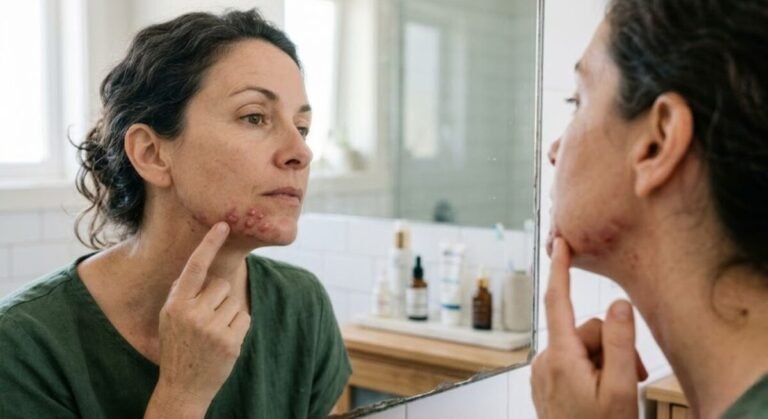
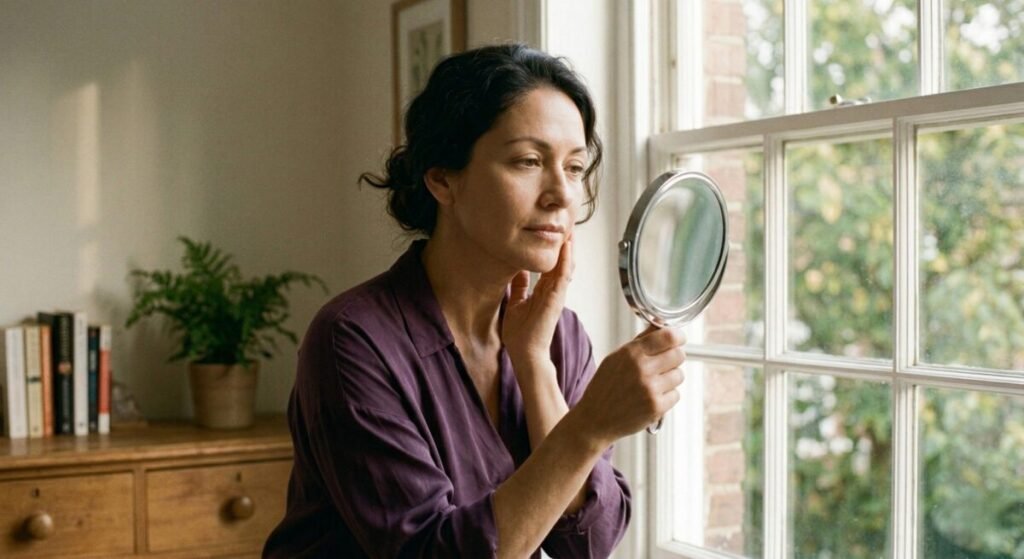
Two years ago, I woke up with a cystic breakout on my chin that looked like it required its own zip code—and dehydration lines around my eyes that I could have planted seeds in. Same morning. Same face. My forehead was producing enough oil to fry an egg, while my cheeks felt like crepe paper. I stood in front of the bathroom mirror holding a salicylic acid pad in one hand and a thick cream in the other, completely paralyzed, because using one felt like betraying the other half of my face.
Welcome to perimenopause skin changes, where your face can’t decide what decade it’s living in and you’re supposed to just figure it out while also dealing with night sweats and the sudden, inexplicable rage that overtakes you when someone chews too loud.
What’s Actually Happening (And Why No One Warned You)
Here’s what they don’t tell you about why is my skin suddenly changing in my 40s: it’s not one problem pretending to be several. It’s one massive hormonal shift causing genuinely contradictory symptoms at the exact same time, and you’re not losing your mind.
The biological reality is this: as estrogen declines, your skin loses its ability to hold onto water. Estrogen is responsible for hyaluronic acid production, collagen synthesis, and the integrity of your skin barrier—the literal fortress that keeps moisture in and irritation out. When estrogen dips, that barrier weakens. Water escapes. Your skin gets dry, dull, and suddenly sensitive to products that never bothered you before.
Meanwhile, progesterone is also declining, which means the androgens (testosterone and its aggressive little cousin, DHT) that were always present are now relatively dominant. Androgens trigger sebum production and can enlarge pores. So while your barrier is failing and your skin is parched, your sebaceous glands are in overdrive. You’re simultaneously dehydrated and greasy. Flaky and clogged. It’s not a skincare failure. It’s a hormone war, and your face is the battlefield.
This is perimenopause breakouts dry skin in its full maddening glory—and it’s the question nobody answers clearly because most content treats the oiliness and the dryness as separate issues requiring separate solutions. They’re not. They’re two symptoms of the same systemic chaos.
The Estrogen-Progesterone Seesaw
Perimenopause is not menopause–lite. It’s not a gentle decline into hormonal retirement. It’s a volatile, years-long transition where your hormones spike and crash unpredictably. Some months your estrogen might surge (hello, tender breasts and weepiness over dog food commercials). Other months it plummets. Your skin doesn’t know what’s coming, so it reacts to everything. One week you’re dry. The next week you’re broken out. Sometimes both. The fluctuation is the journey, not just the destination.
The Cortisol Loop Nobody Mentions
And because life is hilarious, perimenopause also ruins your sleep. Night sweats, restless legs, the 3 am anxiety spiral about whether you said something weird at a party in 2009—none of it is conducive to rest. Poor sleep spikes cortisol. Elevated cortisol breaks down collagen faster, impairs skin repair, and increases inflammation. So now you’ve got the estrogen-progesterone seesaw plus a cortisol-driven aging accelerator. Your skin isn’t just changing—it’s under siege.
My Skin Threw a Tantrum (And Here’s What I Learned)
I’ve always had good skin. Not perfect, but cooperative. The kind of skin that forgave the occasional laziness and didn’t punish me for not washing my face after a long night. Then, sometime around 43, it turned on me like a villain origin story.
Products I’d used for years suddenly stung. My favorite exfoliating toner left my face red and angry. My rich night cream sat on top of my skin like a layer of Crisco while my undereyes still looked like the Sahara. And the breakouts—god, the breakouts. Not the cute little surface zits you can cover with concealer. Deep, painful, under-the-skin cysts that took up residence on my jawline and chin and refused to leave. I looked puffy and dehydrated at the same time. I looked tired, in a way that sleep couldn’t fix.
I went to my dermatologist convinced I had rosacea, or an allergy, or some rare skin condition I’d need a biopsy to diagnose. She took one look at me and said, “How’s your cycle?” And I wanted to throw something, because I’d spent months trying to fix my skincare routine when the actual problem was happening in my ovaries.
Can perimenopause cause adult acne? Absolutely. And it can do it while also making your skin dry, dull, and sensitive. It’s an overachiever that way.
Why Is My Skin Oily and Dry at the Same Time? (The Science Made Simple)
Here’s the thing most articles won’t tell you clearly: oily skin and dry skin are not opposites when you’re dealing with perimenopause. You can have excess sebum (oil) and depleted hydration (water) simultaneously, because they’re controlled by different mechanisms.
Sebum is produced by your sebaceous glands and regulated by androgens. When progesterone drops and androgen activity increases, those glands go into overdrive. Your T-zone gets slick. Your pores look larger. You’re blotting your forehead by noon. But sebum is not moisture. It’s oil. It sits on the surface and can actually trap dead skin cells and bacteria, leading to clogged pores and breakouts.
Hydration, on the other hand, is about water content within your skin cells and your ability to retain it. That’s controlled by your skin barrier—the lipid matrix that holds everything together—and by humectants like hyaluronic acid. Estrogen supports both. When estrogen declines, your barrier weakens. The lipids between your skin cells break down. Water evaporates. Your skin becomes dehydrated, which can look like dullness, fine lines, flakiness, and that horrible tight feeling after you wash your face.
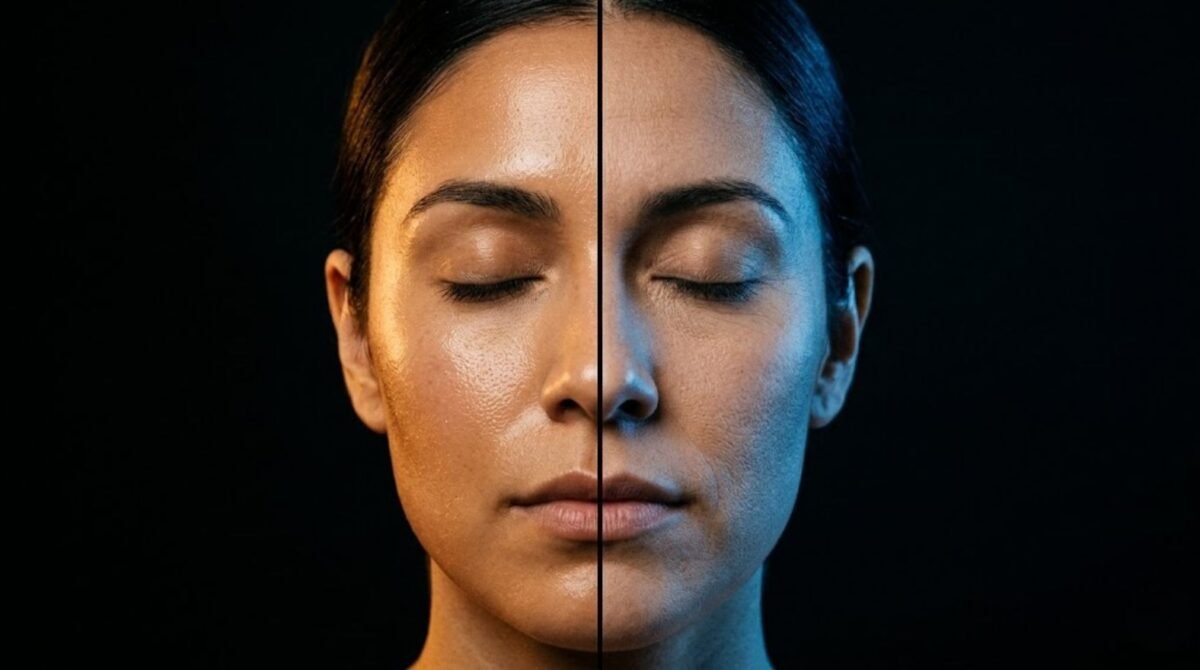
So why is your skin getting worse in your 40s? Because you’re losing the barrier integrity that keeps water in while simultaneously ramping up the oil production that clogs things up. Your skin barrier is too weak to hold hydration, but your sebaceous glands are still producing enough oil to make you shiny. The result is a face that feels dry, looks oily, and breaks out—all at once. It’s not a contradiction. It’s perimenopause.
And here’s the part that made me want to scream: most traditional acne treatments make this worse. Harsh cleansers strip your already-compromised barrier. Aggressive exfoliants inflame skin that’s already sensitized. You end up in a cycle where you’re trying to “fix” the oiliness and breakouts but inadvertently destroying the barrier, which makes the dryness and sensitivity worse, which triggers more oil production as your skin tries to compensate. You’re solving the wrong problem.
What Actually Helps (No, Not That)
I’m not going to pretend I figured this out overnight. I tried everything. I cycled through actives like I was training for a decathlon. Retinol made me peel. Vitamin C stung. Glycolic acid left me red and raw. I was so focused on treating the breakouts that I kept ignoring the giant flashing sign that said “YOUR BARRIER IS BROKEN.”
What finally worked wasn’t adding more—it was pulling back and getting strategic. I needed products that could address both the barrier failure and the oil regulation without tipping the scale too far in either direction. Gentle, but not inert. Hydrating, but not heavy. Regulating, but not stripping.
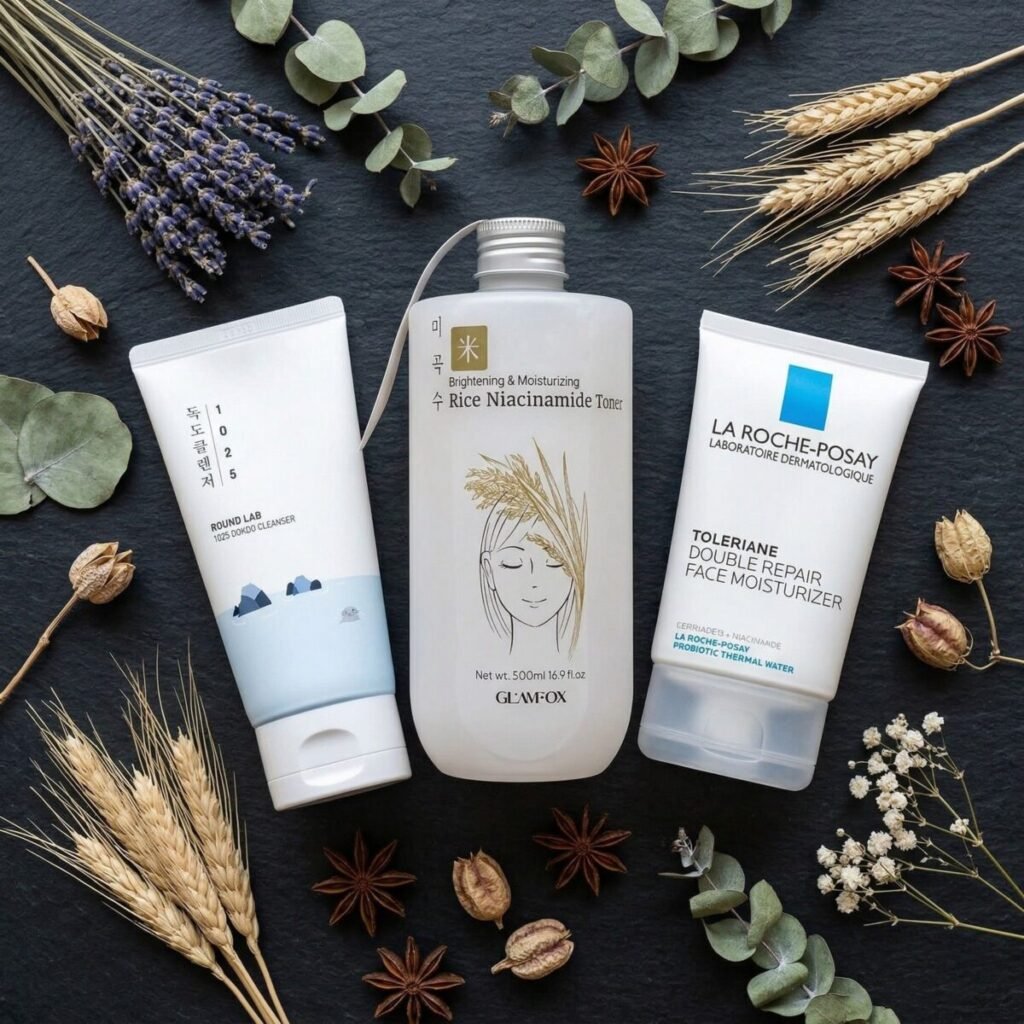
The ROUND LAB 1025 Dokdo Cleanser was the first thing that didn’t make me want to immediately slather my face in Aquaphor afterward. It’s pH-balanced, genuinely gentle, and uses deep sea water and ceramides to clean without stripping. It doesn’t leave that tight, squeaky-clean feeling that I used to think meant “effective” but actually just meant “destroyed my barrier.” It removes the day—makeup, SPF, city grime—without making my skin feel like parchment. If your skin is also suddenly reactive, this is the reset [INTERNAL LINK: sensitivity reset].
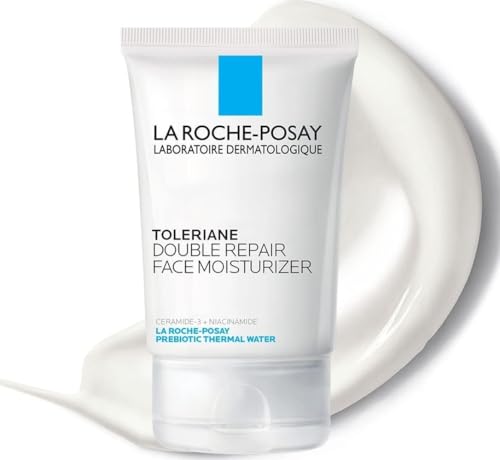
For moisture, I switched to the La Roche-Posay Toleriane Double Repair Face Moisturizer. This is the one that made me realize I’d been thinking about moisturizers all wrong. I’d been using thick, occlusive creams because my skin felt dry, but they were just sitting on top of all that oil and making me break out more. This one has ceramides to repair the barrier and niacinamide to regulate sebum production and reduce inflammation. It sinks in. It doesn’t feel like I’m wearing a mask. It hydrates the dry parts without suffocating the oily parts. It gets it.
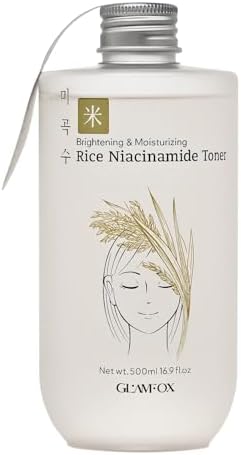
The middle step—the one I didn’t know I needed—was the Glamfox Rice Niacinamide Toner. Niacinamide is the unsung hero of perimenopause skin. It regulates oil, strengthens the barrier, reduces inflammation, and improves hydration—all the things you need when your skin can’t decide what it’s doing. This toner is light enough that it doesn’t add weight but substantial enough that it actually does something. I use it after cleansing, before moisturizer, and it’s the thing that finally made both halves of my face happy at the same time.
The Gentleness Trap
Here’s where I’m going to lose some people: “gentle” is not a strategy. Gentle is a requirement, but it’s not enough on its own. I wasted months on gentle cleansers that didn’t clean and gentle moisturizers that didn’t repair. You don’t need soft—you need strategic. You need products that are gentle and functional. That repair the barrier while regulating oil. That hydrate without clogging. That understand your skin is getting contradictory hormonal signals and meet it where it is.
Who This Is For (And Who Should Skip This Post)
This post is for women in active perimenopause—the years-long transition before menopause where your hormones are fluctuating wildly and your skin has decided to process all of it publicly. If you’re confused, frustrated, and feel like your face has been possessed by a chaotic teenager and a dehydrated crone at the same time, you’re in the right place.
If you’re in full menopause (12+ months without a period) or still cycling regularly with no skin chaos, your experience might be different. Menopause brings its own skin challenges, but they’re typically more about consistent dryness and loss of elasticity rather than this maddening paradox. And if you’re in your 30s with great skin, bookmark this for later. It’s coming. I’m sorry.
If you’re looking for the broader lifestyle and ritual frame around this transition—the candles, the moon phases, the reclaiming of power through intentional practice—head to Your Skincare Routine is Already a Ritual. This post is about the biological mechanics and the practical fixes. The witchery is implied.
The Verdict (What I Wish Someone Had Told Me)
The perimenopause skin paradox is real, it’s hormonal, and it’s not a failure of skincare literacy on your part. Your skin is genuinely receiving mixed signals from your endocrine system. You’re not doing it wrong. Your face is just trying to navigate a hormonally volatile transition with the tools it has, and sometimes those tools are contradictory.
I wish someone had told me earlier that this wasn’t about finding the “perfect” product or building the “ultimate” routine. It was about understanding that my skin barrier was compromised and my oil production was elevated, and I needed to address both simultaneously instead of ping-ponging between treatments for dry skin and treatments for oily skin.
You’re not broken. Your skin isn’t betraying you. It’s just trying to survive a biochemical earthquake. And once you stop fighting the paradox and start working with it—barrier repair plus oil regulation, hydration plus gentle cleansing—it gets easier. Not perfect. Not like it was at 25. But manageable. And honestly, that’s enough.

Discover more from The Harpy Nest
Subscribe to get the latest posts sent to your email.