

The Forgotten Zones: A Body Skincare Intervention for Women Over 40
This post contains affiliate links. If you buy through them, I may earn a small commission — at no extra cost to you.
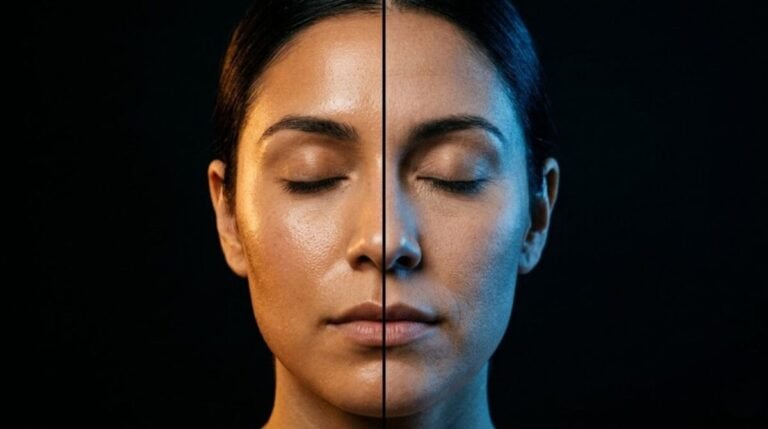
Body skincare over 40 is genuinely one of the most neglected corners of most women’s routines — not because we don’t know better, but because we’ve been conditioned to treat “skincare” as a synonym for “face.” Everything below the jawline exists in a kind of care desert, and the forgotten skincare zones women 40 and older have been quietly ignoring are starting to tell on us. The neck. The chest. The hands. The elbows. The upper arms. They didn’t used to require attention. Now they do. This is the intervention.
What Actually Changes Below the Jaw After 40
Estrogen decline accelerates collagen loss, and it does so unevenly — the face gets the focus, but the neck, chest, and hands are losing structural support at the same rate, sometimes faster because they’ve spent decades getting less moisture and more sun. Sebaceous glands slow down across the whole body, which means skin gets drier faster and stays drier longer without intervention. That casual pump of lotion you’ve been applying once a day for the past twenty years? It’s no longer enough to keep pace with what’s actually happening at the cellular level.
Sun damage also starts announcing itself. The spots and texture that have been accumulating on your chest, shoulders, and the backs of your hands since your twenties begin surfacing in your forties and fifties with increasing confidence. The Peri Paradox — how perimenopause accelerates skin changes covers the hormonal piece in more depth, but the summary is this: perimenopause and menopause don’t just change your face. They change your skin as an organ, everywhere.
The good news is that body skin responds well to the same ingredients that work on your face — retinol, peptides, ceramides, hyaluronic acid, AHAs. You don’t need a separate complicated system. You just need to stop pretending the routine ends at your chin.

The Zones We’re Ignoring (And Why They Age Fastest)
The neck has thinner skin than your face and is in constant movement — up, down, side to side, forward over a phone screen approximately 400 times a day. It loses firmness early and shows horizontal lines and crepey texture fast, especially without consistent hydration and barrier support.
The chest and décolletage get significant sun exposure and almost zero SPF love. By 40, this is often where sun damage is most visible — texture changes, pigmentation, a kind of roughness that wasn’t there a decade ago. Neck and chest skincare should be treated as a single continuous zone, not an afterthought tacked onto the face routine.
The hands are the most honest body part you have. They age in direct proportion to how little attention you’ve paid them. Thin skin, prominent veins, pigmentation spots, dry knuckles — hands are also exposed to more environmental assault than almost any other area.
Elbows and knees are purely a texture issue — they get rough, dark, and scaly because the skin there is thicker and the cell turnover is slower. Post-winter elbows especially have a way of looking like something fossilized.
Upper arms — the bat wing conversation I refuse to have, but the skin there does lose elasticity and can develop keratosis pilaris (those small rough bumps) that responds beautifully to regular exfoliation and barrier support.
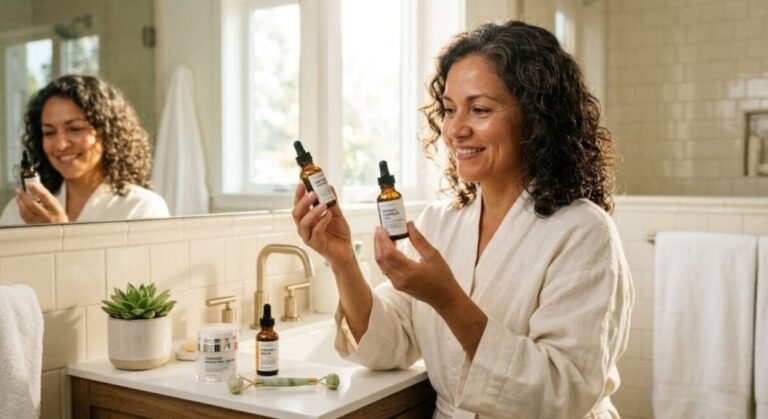
How Should I Take Care of My Skin After 40? Start in the Shower.
Most women over 40 are unknowingly sabotaging their skin in the shower — hot water, harsh soap, and then a quick towel dry that strips whatever moisture barrier was left. By the time you reach for a body lotion five minutes later, you’re already working from a deficit.
The shift is simple: treat your shower as step one of your body routine, not the precursor to it. That starts with what you’re actually cleansing with. The temperature still matters. Warm, not scalding.
I’ve started using Bioderma Atoderm Shower Oil as my first step — it’s an oil-to-milk cleanser that cleans without the stripping, specifically designed for dry and sensitive skin. For anyone whose skin is very dry, reactive, or dealing with eczema flares, it’s a meaningful upgrade over conventional body wash. On days when I want a proper follow-through, I go in with Naturium the Booster Body Wash with Hyaluronic Acid and Ceramides as a second step — ceramides replenish what hot water depletes, and the hyaluronic acid starts the hydration work before you even step out. Used alone, the Naturium is excellent. Used as a double-cleanse sequence with the Bioderma, it’s the kind of shower upgrade that makes you feel like you’ve finally gotten your life together.
The 7 Products That Changed My Below-The-Jaw Routine
1. Bioderma Atoderm Shower Oil — The Foundation
If your skin is dry enough that a standard body wash leaves you feeling tight before you’ve even dried off, the Bioderma Atoderm Shower Oil is worth every penny of its very reasonable price. It emulsifies on contact with water, which means it actually rinses clean rather than leaving a film, and it doesn’t smell like it’s trying too hard. The formula supports the skin barrier rather than working against it — which is exactly what skin with diminishing sebum production needs. This is the product that converted me to the idea that cleansing counts as skincare.
2. Naturium The Booster Hyaluronic Acid Body Wash — The Follow-Through
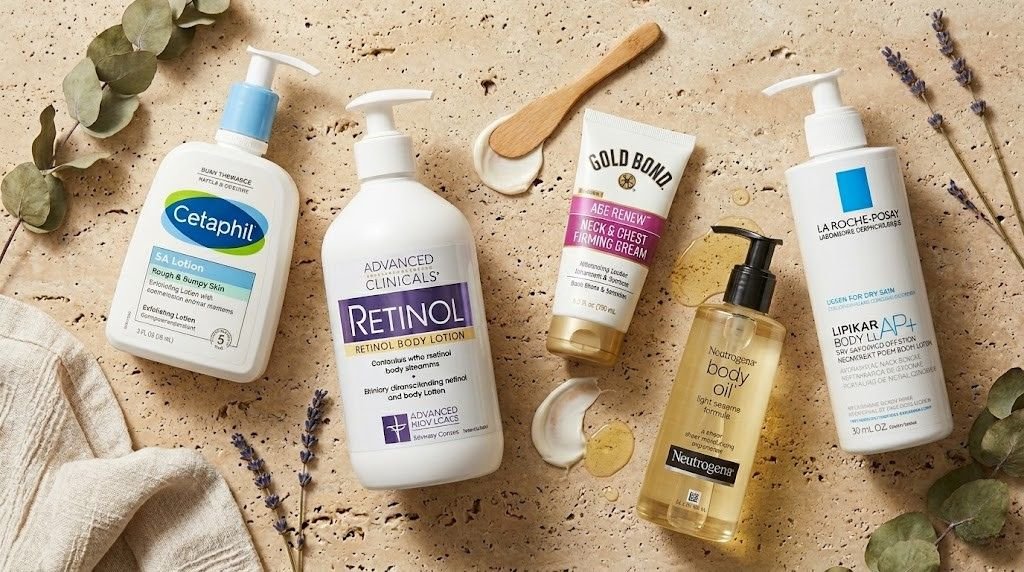
The Naturium The Booster Hyaluronic Acid Body Wash is the kind of product that’s easy to dismiss because the packaging is aggressively boring and the price is reasonable. Don’t. The ceramide and hyaluronic acid combination does real work, and for anyone who’s dealing with skin that’s been wrecked by winter, stripped by over-sanitizing, or just chronically under-hydrated, this is a reset. I specifically use it on my hands as a wash in addition to the shower routine — it’s gentle enough for twice-daily contact without making eczema-prone knuckles worse.
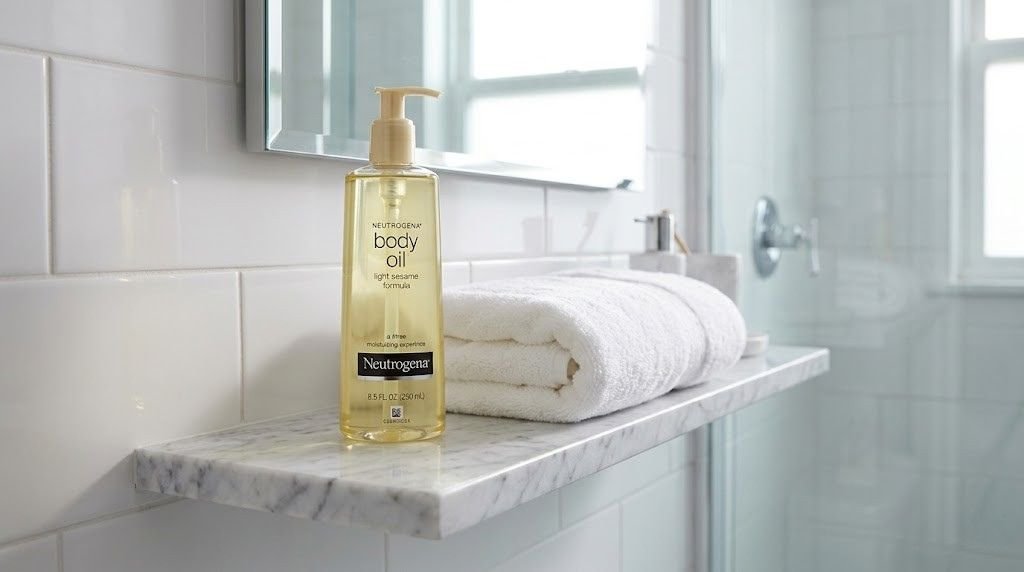
3. Neutrogena Body Oil Light Sesame Formula — The Seal
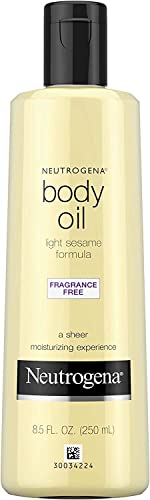
Here’s the step most people skip and then wonder why their lotion isn’t working: you need to seal damp skin before it dries completely. The Neutrogena Body Oil Light Sesame Formula is a drugstore classic for a reason — it’s lightweight, absorbs fast enough that you’re not leaving oily prints on everything you touch, and it locks in the moisture your skin just absorbed in the shower before it evaporates. Apply to damp skin immediately after toweling off lightly, then follow with your lotion or body cream. After 40, this sequence matters more than it ever did at 30 — the skin’s ability to retain water decreases with age, and this step is essentially plugging that leak.
4. Advanced Clinicals Retinol Body Lotion — The Intervention
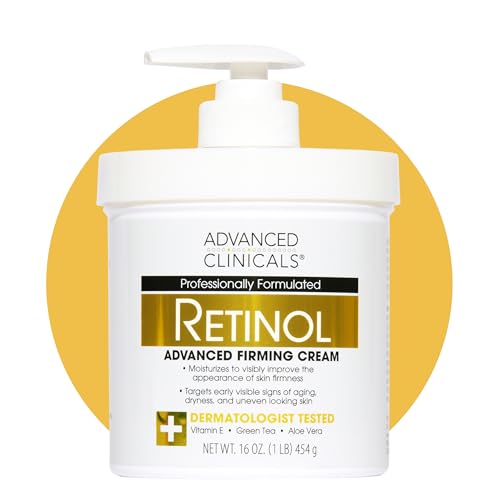
Nobody warns you about crepey body skin. You’re dealing with your face, your neck, maybe your décolletage, and then you look at your upper arms or inner thighs in a certain light and think: when did that happen? Retinol is the answer on the face, and there’s no reason it shouldn’t be the answer on the body too. Advanced Clinicals Retinol Body Lotion is formulated specifically for body use — a lower concentration than you’d use on your face, but consistent enough to make a visible difference in skin texture and firmness over time. This is not an overnight fix; nothing real is. But used regularly on the arms, thighs, and stomach, it addresses the crepiness and surface texture that body skin starts accumulating in midlife with a specificity that a standard moisturizer simply cannot match. Start two or three nights a week and build from there, the same way you’d approach facial retinol.
5. Gold Bond Age Renew Neck & Chest Firming Cream — The Dedicated Zone Worker
The neck and chest genuinely deserve their own product, and the Gold Bond Age Renew Neck & Chest Firming Cream is the argument for why a zone-specific formula earns its counter space. The texture is designed for the particular challenge of the décolletage — slightly more occlusive than a standard body lotion, applied in upward strokes on the neck and smoothed across the chest. What I’ve noticed most is the improvement in texture — that roughness and slight crepe that starts appearing on the sternum area responds well to consistent use. The firming claims are more incremental than dramatic, but the hydration is immediate and the skin feels noticeably smoother within a couple of weeks of daily use. For anyone who has spent good money on dedicated neck creams and been underwhelmed, this is the accessible version that actually does something.
6. La Roche-Posay Lipikar Body Lotion Daily Repair Cream — The Whole-Body Answer
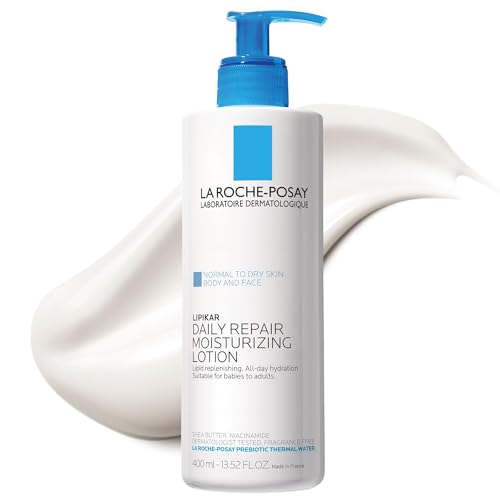
If you’re only going to do one thing differently after reading this post, use a better body moisturizer. La Roche-Posay Lipikar Body Lotion Daily Repair Cream is what I reach for as the all-over body step, applied after the Neutrogena body oil while my skin is still slightly damp. The La Roche-Posay Lipikar range is designed for compromised, very dry, and sensitive skin — it’s the same family of products dermatologists recommend for eczema, which means it’s built for serious barrier repair rather than surface-level hydration. The texture is rich but not greasy, and it absorbs well enough to not feel like you’re marinating in it. For the body, especially after the oil-sealing step, this is what brings everything together. The skin just feels fundamentally different the morning after — softer, calmer, with none of that tight, papery quality that becomes so familiar after 40.
7. Cetaphil Gentle Exfoliating SA Lotion — The Texture Reset
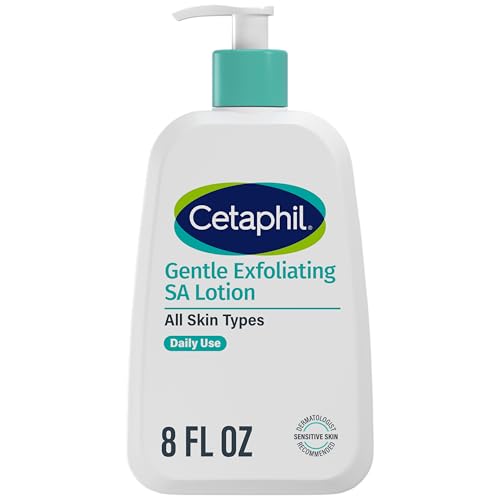
This one holds a specific and slightly unglamorous place in my routine, and I’m including it because nothing has been more useful for the problem nobody wants to talk about: dead skin on the knuckles. Thanks to a combination of eczema, winter exposure, and years of over-sanitizing, my hands can develop a rough, almost scaly buildup on the knuckles that regular lotion does nothing for. The Cetaphil Gentle Exfoliating SA Lotion uses salicylic acid to dissolve the dead skin buildup rather than just sitting on top of it — which is the only approach that actually works for this kind of texture issue. I also use it on elbows and knees post-winter, when they’ve gone rough and dark and impervious to ordinary moisturizer. Apply it after cleansing in the areas that need it — it’s lightweight enough to use regularly without overdoing the exfoliation, and the results are faster than you’d expect from something this gentle.
What Is the Best Body Lotion for Aging Skin?
The honest answer is that it depends on what your skin actually needs — which is a more useful distinction than any single product recommendation. If your primary issue is severe dryness and barrier compromise, La Roche-Posay Lipikar is the most targeted choice. If you’re dealing with crepey texture and loss of firmness, you need retinol in your body routine, full stop. If it’s rough texture on specific zones like hands, elbows, and knees, a gentle SA exfoliant will do more than any moisturizer alone. The best routine for aging skin uses layers — an oil to seal, a treatment lotion for texture, a barrier repair cream for overall hydration — rather than a single product trying to solve everything at once.
How Do I Tighten Skin on My Neck and Chest?
Consistent, ingredient-driven skincare does make a meaningful difference in the skin’s quality and texture, but it’s worth being clear about what it’s actually doing: improving elasticity, hydration, and surface texture, which creates the appearance of firmer, smoother skin. Retinol stimulates collagen production over time. Peptides support skin structure. Dedicated products like the Gold Bond Neck & Chest Cream address the zone-specific challenges that general body lotion ignores. SPF on the neck and chest daily — something most of us apply to our faces and nowhere else — also prevents further structural damage. Skin Cancer Vigilance covers why the neck and chest are particularly high-risk areas and why sun protection below the jaw is non-negotiable, not optional. Real intervention comes from stacking these habits consistently, not from one product applied hopefully twice.
The Closing Take
The face is not a separate entity from the rest of your body. We’ve been treating it like one for decades, and after 40, that split starts showing in ways that are harder to quietly ignore. The intervention isn’t complicated — it’s a shower upgrade, a sequencing shift, and a handful of targeted products applied consistently to the zones that have been quietly aging without any support.
SHOP THIS POST

Discover more from The Harpy Nest
Subscribe to get the latest posts sent to your email.