
Shadow Work and Skincare: What Tending Your Skin Has to Do With Tending Your Shadow Self
This post contains affiliate links. If you buy through them, I may earn a small commission — at no extra cost to you.
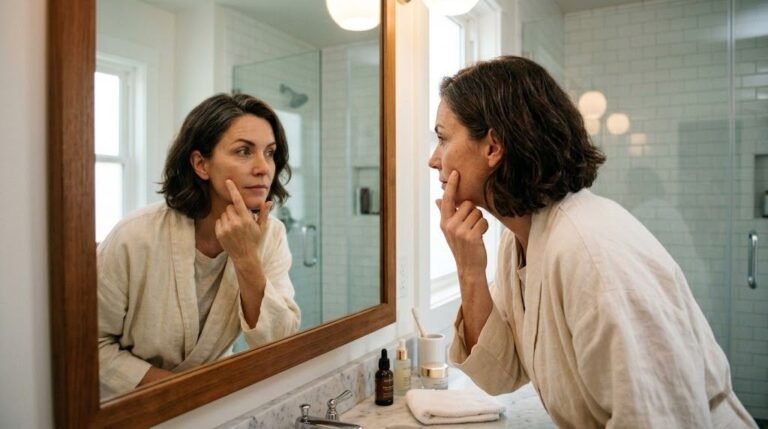
There was a night, not long ago, when I stood at my bathroom mirror and felt something shift into shame before I even registered what I was looking at. Just — a flash. A quick, ugly feeling. And then I was already reaching for the product, already doing the thing, already in motion before I’d let myself sit with what just happened.
That reaction was shadow work self-care waiting to happen. I just didn’t know it yet.
The shadow doesn’t always announce itself. Sometimes it shows up at 10 PM, in the bathroom, wearing your face.

What Shadow Work Actually Is (And What Jung Actually Said)
Carl Jung coined the concept of the “shadow” to describe the parts of ourselves we’ve pushed underground — the emotions, impulses, and traits we decided were unacceptable and learned to hide, usually early, usually because someone we loved needed us to. The shadow isn’t evil. It’s just exiled.
Shadow work, then, is the practice of retrieving what you exiled. Not to make peace with everything in some soft, forced way — but to stop letting the buried stuff run you sideways from underneath.
In spirituality, shadow work practices operate on a similar principle: what you refuse to look at doesn’t disappear. It shows up as patterns, projections, the inexplicable charge you feel when something small hits too hard. Working with the shadow means making the unconscious conscious, one uncomfortable look at a time.
What it isn’t: therapy (though it can complement therapy), a 21-day TikTok challenge that resolves your childhood in three weeks, or an invitation to wallow. The goal is integration — holding your whole self without flinching — not excavation for its own sake.
Why Your Skin Became the Battlefield
Here’s what nobody says out loud: for women over 40, the bathroom mirror is already doing shadow work on us, whether we agree to it or not.
Fine lines where there were none. A different quality to the skin around the eyes — not bad, just different, which somehow feels worse because you have no vocabulary for it yet. The face that doesn’t quite match the one in your head. These aren’t just cosmetic observations. They’re triggers for some of the deepest shadow material we carry: fear of becoming invisible, grief for a version of yourself that existed a decade ago, rage at beauty standards you absorbed so young you thought they were your own opinions.
The shadow work beauty ritual that most women over 40 are already practicing — unconsciously, reluctantly — is the one that happens every morning when they decide how to feel about what they see. Integrating the shadow self doesn’t mean loving everything you see. It means noticing what makes you recoil, and getting curious about that instead of reaching for concealer before the feeling even finishes forming.
The bathroom mirror is honest. That’s the problem. And also, maybe, the whole point.
If this landed somewhere real, the Coven is where the conversation continues. We go deeper in the newsletter — more of this kind of writing, less of everything else. Join us below.
How Do You Actually Start Shadow Work? (Start Here, Not There)
The standard advice is: get a journal, sit with your feelings, write down what comes up. And that works — eventually, for some people, on some days. But for a lot of us, the route through the head is heavily defended. We’re articulate. We’re smart. We can write around our own feelings for pages before we even graze them.
The body is harder to argue with.
Embodied shadow work practices — rituals that engage sensation, attention, and presence — can open doors that mental effort keeps finding a way to lock. Skincare, done with intention instead of autopilot, is one of the most underrated entry points into this work. It’s repetitive, which means it can become meditative. It’s intimate, which means it requires presence. And it happens in front of a mirror, which means it forces a reckoning.
The Mirror Moment
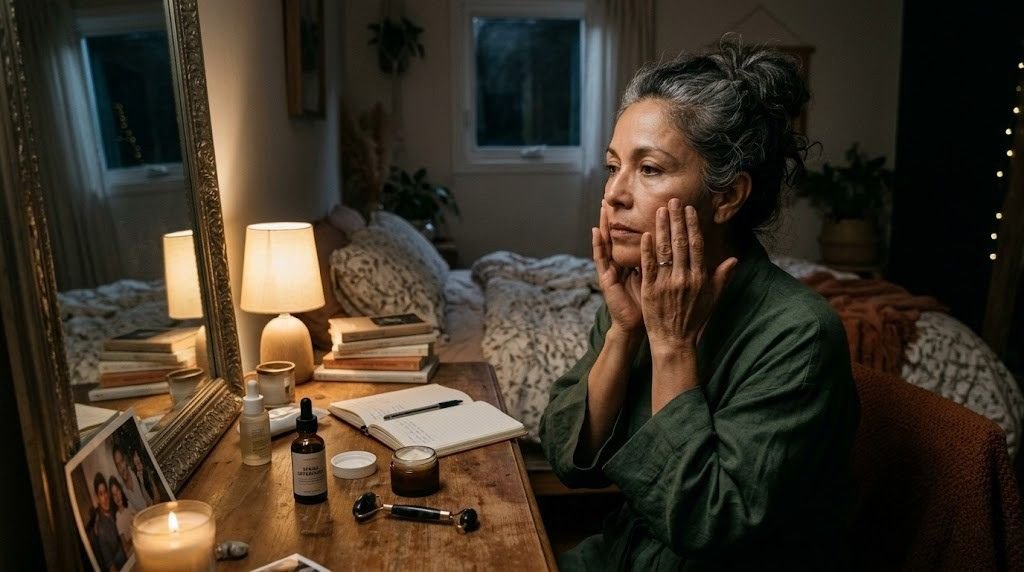
This is a practice, not a metaphor. During your evening skincare routine, try staying — just one full minute, without moving to the next step. Not staring yourself down. Not performing calm. Just staying.
Notice what surfaces. The impulse to look away. A thought that comes in from nowhere. A tightness in the chest. A flash of something almost like tenderness, then the immediate retreat from it.
You don’t have to analyze it. You don’t have to resolve it. You just have to stay long enough to notice that it’s there. That’s shadow work. It doesn’t always look like sitting on a meditation cushion. Sometimes it looks like not immediately reaching for the toner.
The Journal as Witness, Not Homework
If you’re ready to go further, a journal becomes less about having answers and more about catching what floats up. The Shadow Work Journal, 2nd Edition approaches this right — structured enough to get you into the territory without feeling like you’re being assigned homework by your own psyche. I use it alongside skincare, not instead of it; the physical ritual opens something, and the journal catches what comes through.
Here are five prompts I wrote specifically for this intersection, because I couldn’t find them anywhere else and I needed them:
1. When I look at my face today, the first thought I have is ___. The feeling underneath that thought is ___.
2. What did I believe about older women’s faces when I was young? Where did I learn that? Is any part of it still running?
3. If the way I talked to my skin in my head were something I said to a friend, what would she say back?
4. What am I actually afraid will happen if I look the way I look? What’s the story I’m telling about what that means?
5. Is there any part of this face I’ve never let myself appreciate — not despite what it shows, but because of it?
Leave space. Don’t rush to the next prompt. The discomfort between questions is where the work happens.
Building the Shadow Work Beauty Ritual
A ritual is not a routine with better lighting. A routine is what you do. A ritual is what you decide to mean by what you do. The shift is interior, not aesthetic — though atmosphere helps anchor the interior shift, which is why I’m not above using a candle.
Set the Atmosphere, Not a Scene
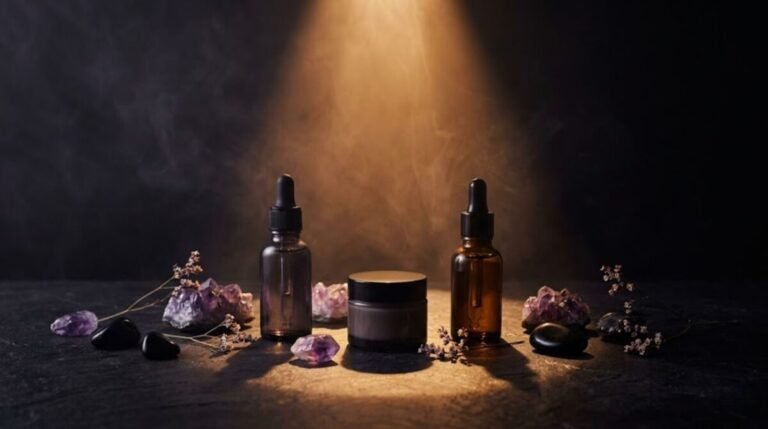
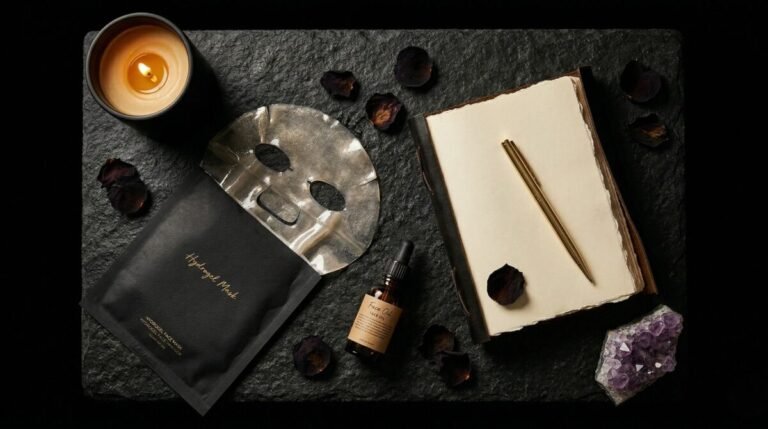
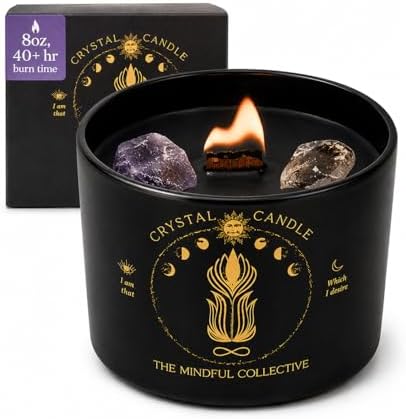
There’s a difference between creating a beautiful flat lay for someone else’s consumption and giving your nervous system a signal that something different is about to happen. The Black Crystal Candle for Women with Healing Crystals does the latter for me. Scent is the anchor — your nervous system responds to smell faster than almost any other sense, which means lighting this before you begin is a legitimate neurological choice, not just aesthetic preference. It marks the beginning. The physical act of lighting it says: this time is set apart.
You don’t need to assign it meaning beyond that. The meaning comes from consistency. Light it enough times before doing this work, and your body will start to drop its shoulders before you’ve even picked up the cleanser.
→Related obsession: on how to make intentional practices stick and build a larger evening ritual framework.
The Skin You’re Actually In
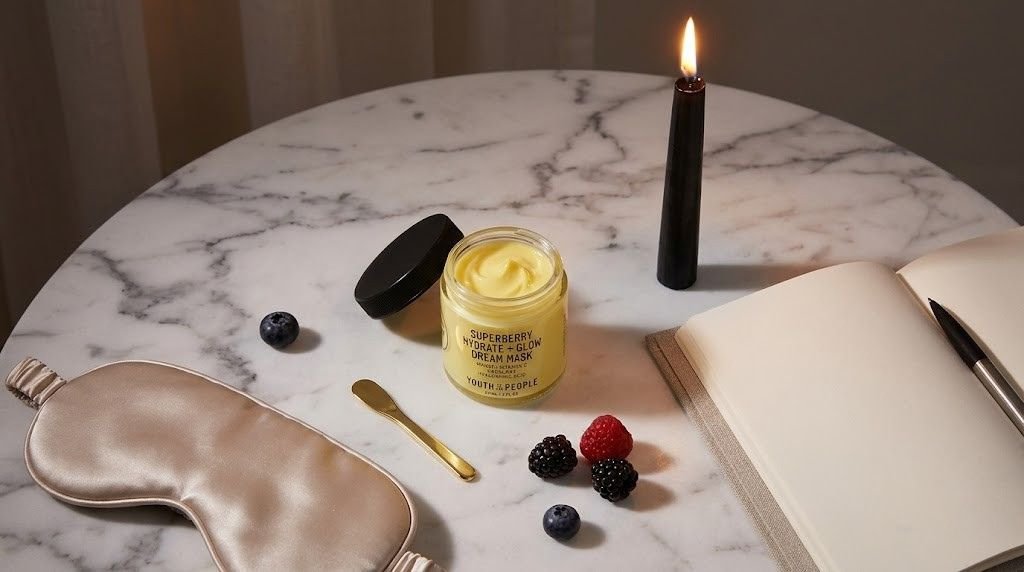
After the mirror moment, after the noticing — this is where you tend.
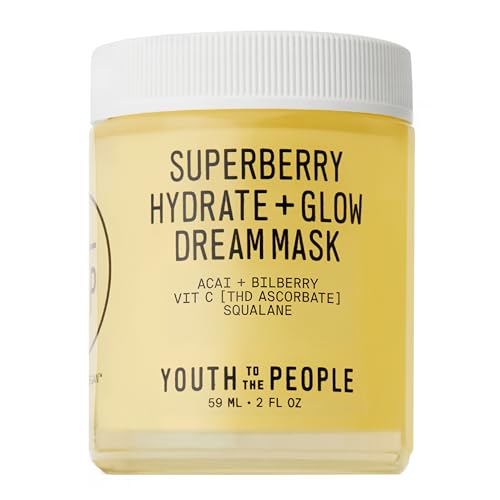
The Youth To The People Superberry Hydrate + Glow Dream Mask goes on last, applied slowly and deliberately, because speed is how you stay checked out. The formula is genuinely excellent — antioxidant-dense, hydrating without heaviness, the kind of skin-in-the-morning result that makes you trust a product — but what matters in this context is that it requires touch, takes a moment, and gives you something to do with your hands while you integrate what just came up in the mirror.
The language I’ve had to unlearn: correcting, fixing, fighting. The language that replaced it: tending. There is a version of using skincare products that is an act of low-grade self-hostility — every application a reminder of what you’re trying to overcome. There’s another version where it’s just care. Slow, deliberate, undeserved-feeling-at-first, eventually ordinary care.
The shadow work self-care is learning to tell the difference, in real time, between which version you’re doing tonight.
For those of us working with the lunar calendar, the new moon is a natural time to introduce or deepen this practice — release what you’ve been carrying about your face, begin tending with intention. The full moon is for recognition: what has changed, what you’ve integrated, what you’re willing to celebrate.
→ This pairs nicely: on building moon phase practices into your beauty routine.
Can Self-Care Actually Be a Spiritual Practice? (Yes. Here’s Why That’s Not Silly.)
The embarrassment some of us feel around the word “spiritual” is itself shadow material — worth noting, if not unpacking right now.
But to answer the question directly: yes. And the reason isn’t mystical. It’s structural.
Every serious spiritual tradition that has ever existed has relied on repetitive, embodied, daily acts to create the conditions for transformation. Prayer. Ablutions. Prostrations. Candle lighting. Sitting. Walking. The ritual bath. None of these are dramatic. All of them are ordinary. Their power comes from intention applied consistently to the physical — which is exactly what a shadow work beauty ritual is, at its core.
The question isn’t whether washing your face can be spiritual. The question is whether you’re willing to do it consciously. Presence is the practice. Consciousness is the ritual. What you do with your hands is almost beside the point — except that your hands are already touching your face every morning and every night, which means you already have the structure. You’re just deciding whether to show up for it.
Self-care becomes spiritual practice the moment you bring your actual self to it — not the curated self, not the one performing wellness, but the one who felt something flash across her face in the mirror and looked away before she caught what it was.
Don’t look away. That’s the whole thing.
If this landed somewhere real, the Coven is where the conversation continues. We go deeper in the newsletter — more of this kind of writing, less of everything else. Join us below.
Shop This Post

Discover more from The Harpy Nest
Subscribe to get the latest posts sent to your email.