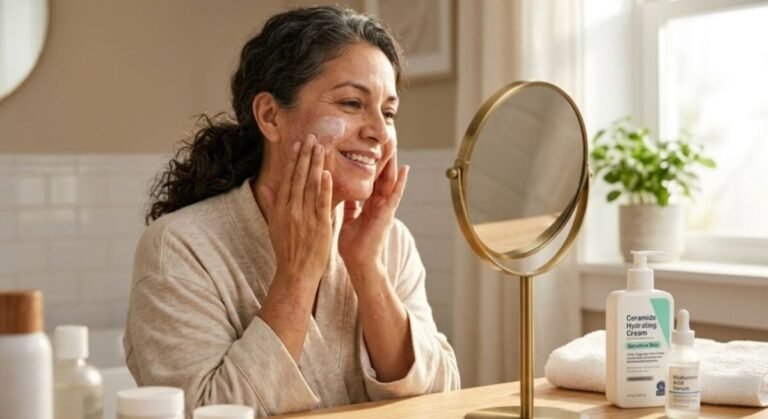


Melanin and Menopause: The Skincare Conversation for Women of Color Over 40
This post contains affiliate links. If you buy through them, I may earn a small commission — at no extra cost to you.
Most menopause skincare content was written for someone who isn’t you. The baseline assumptions — what “aging skin” looks like, which actives to reach for, what “brightening” even means — were built around a different complexion. That’s not a conspiracy; it’s a gap, and a significant one. If you’re navigating skincare for Black women over 40 and you’ve been handed the same retinol-and-glycolic advice that gets handed to everyone, this is the conversation you’ve been waiting for. We’re going to talk about what estrogen loss actually does to melanin-rich skin, why the standard recommendations fall short, and what a smarter routine looks like — one that works with your skin instead of against it.
What Menopause Actually Does to Melanin-Rich Skin
Here’s the mechanism, without the medical school preamble.
Estrogen doesn’t just regulate your cycle. It also plays a significant role in controlling melanocyte activity — the cells responsible for producing pigment. When estrogen levels drop during perimenopause and menopause, those melanocytes stop getting reliable instruction. Some go into overdrive, producing excess melanin in clusters. Others thin out. The result is the uneven, patchy landscape that many women of color recognize viscerally but can’t always name: spots that weren’t there two years ago, areas that have gone ashy, a complexion that looks less like itself.
Dropping estrogen also thins the skin, compromises barrier function, and increases the skin’s inflammatory response — which, for melanin-rich skin in menopause, matters enormously. Inflammation is one of the primary triggers of post-inflammatory hyperpigmentation (PIH). The thinner and more reactive your barrier becomes, the more easily a rogue breakout, a too-strong acid, or even a mild physical irritant turns into a dark mark that sticks around for months.
Does Menopause Affect Melanin Production?
Yes — and more directly than most people realize. Estrogen receptors exist on melanocytes, which means estrogen is actively involved in regulating how much pigment those cells produce. When estrogen declines, that regulation falters. Melanocytes can become hyperactive in some areas (hello, new spots along the jawline and upper lip) while pigmentation elsewhere becomes uneven or dull. This explains why spots that were perfectly manageable at 35 suddenly seem to multiply or deepen after 40. It’s not your imagination and it’s not bad luck. It’s hormones, operating exactly where they always were — just less predictably now.
Worth noting: this dynamic is underreported in dermatology literature, largely because most large-scale skin studies have historically skewed toward lighter skin types. The clinical picture for melanin-rich skin in menopause exists, but you may have to look harder to find it — or find someone who has looked for you.
How Does Menopause Affect Black Women’s Skin Specifically?
Differently than it affects lighter skin. Meaningfully differently.
Melanin-rich skin has a higher baseline density of active melanocytes. Under normal circumstances, this is part of what gives darker skin its natural sun protection, its slower visible aging, its tendency toward a certain luminosity. But that same density means hormonal disruption hits with more visible consequences: the erratic melanocyte behavior that estrogen loss causes has more cells to work with. PIH risk is elevated. Dark spots are more pronounced, longer-lasting, and more easily triggered by inflammation — including the inflammation caused by using the wrong actives at the wrong concentration.
Here’s the irony that anyone managing hyperpigmentation on melanin-rich menopausal skin will recognize: darker skin is often simultaneously more resilient and more reactive. It resists UV-induced aging better than lighter skin. And it will hold onto a dark mark from a too-aggressive peel for a year. The same skin, wildly different rules, and most of the content written about menopause skincare doesn’t acknowledge that both things can be true at once.
Why Everything You’ve Read About Menopause Skincare Probably Wasn’t Written for You
The mainstream menopause skincare conversation defaults to a checklist: retinol (high percentage, start immediately), glycolic acid (because exfoliation), brightening serums (usually vitamin C formulas designed to address pinkness and redness rather than hyperpigmentation on deeper tones). There’s nothing wrong with those ingredients in principle. The problem is the framing — the assumption that everyone’s skin is responding to hormones the same way, that “brightening” means the same thing to everyone, that the barrier can handle maximum-strength actives just because a dermatologist on a podcast said so.
If you’ve ever followed advice written for that default reader and ended up with more irritation, more dark marks, or a complexion that felt angrier than when you started — that’s why.
The approach that actually works for melanin-rich skin in this hormonal phase tends to look like this: barrier repair first, always. Gentle actives second, chosen specifically for PIH risk. SPF without negotiation, every day, on top of everything else. And a willingness to go slower than you think you need to, because the damage from moving too fast is much harder to undo on deeper skin tones.
If you’re earlier in this hormonal shift and still trying to map what’s happening, The Peri Paradox, perimenopause skin changes, has a good starting framework for understanding the full arc of what your skin is going through.
The Ingredients Worth Your Counter Space (And the Ones to Use Carefully)
This isn’t a fear list. Nothing here is banned. But there’s a meaningful difference between ingredients that are appropriate for melanin-rich menopausal skin and ingredients that require more caution, lower concentrations, and a slower ramp-up than the standard advice suggests.
Vitamin C — Still the Workhorse, If You Use It Right
Vitamin C inhibits tyrosinase, the enzyme responsible for melanin synthesis. It also neutralizes the oxidative stress that worsens hormonal pigmentation and supports collagen production in skin that’s starting to lose structural integrity from estrogen decline. For skin dealing with hyperpigmentation as a menopause skin of color concern, it belongs in the routine.
The caveat is formulation. L-ascorbic acid (the most potent form) can be destabilizing and irritating, especially on a compromised menopausal barrier. Lower concentrations and more stable derivatives — ascorbyl glucoside, sodium ascorbyl phosphate — are often smarter choices for daily use.
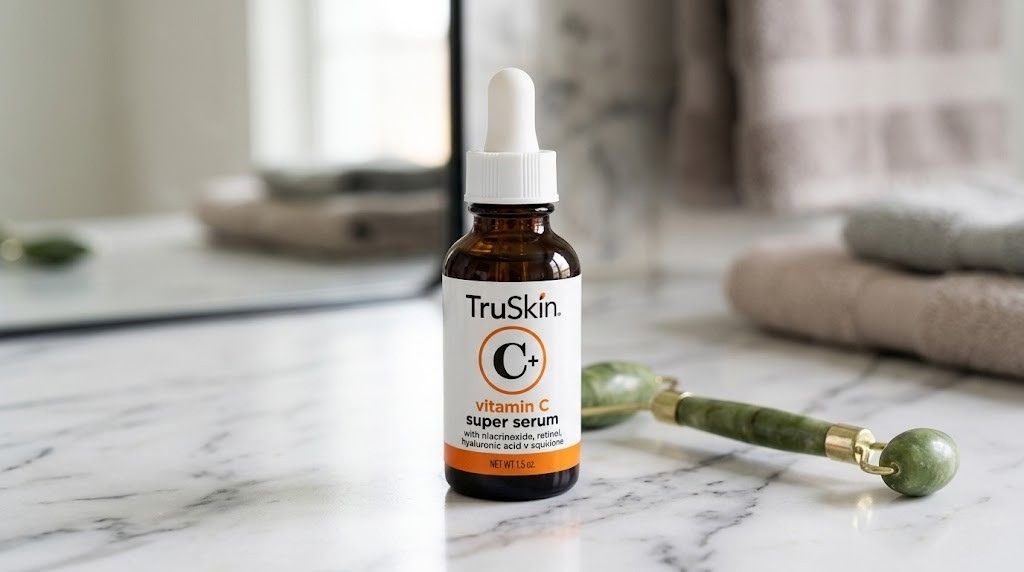
TruSkin Vitamin C Super Serum is one I come back to consistently. It’s well-tolerated on sensitive skin, the concentration is effective without being aggressive, and it layers without issue under SPF — which matters because SPF is non-negotiable and you need your vitamin C to cooperate with it.
For anyone whose skin is more reactive or who wants a gentler entry point, medicube Toner Pads Deep Vita C are worth keeping in rotation. The pad format gives you controlled, even application without dragging or overloading the skin, and the vitamin C concentration sits in a range that’s genuinely brightening without tipping into irritating. Good for skin that’s going through a reactive phase — which, if you’re in perimenopause, may feel like a permanent state.
Niacinamide and Tranexamic Acid — The Unsung Duo
If vitamin C is the headliner, niacinamide and tranexamic acid are doing the structural work behind the scenes.
Niacinamide suppresses the transfer of melanin from melanocytes to skin cells, reduces inflammation, and actively supports barrier repair. Tranexamic acid addresses the vascular component of hyperpigmentation and has shown particular efficacy for melasma — the hormone-triggered pigmentation that often intensifies during perimenopause. Neither one carries meaningful irritation risk. Neither one requires a ramp-up period. For melanin-rich skin that’s simultaneously dealing with pigmentation and a compromised barrier, this combination is the strategically smarter play.
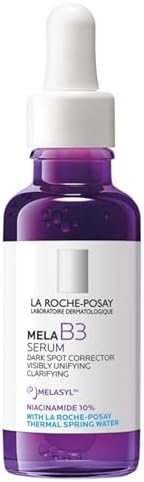
La Roche-Posay Mela B3 Serum pairs niacinamide with tranexamic acid in a formulation designed specifically for persistent hyperpigmentation. It’s gentle enough for daily use, it doesn’t destabilize other actives in your routine, and it’s one of the few drugstore-accessible options that takes the combination seriously rather than using one or the other at token concentrations.
Exfoliation — Yes, But Gently
The instinct to abandon exfoliation entirely when your skin becomes reactive is understandable but counterproductive. Cell turnover slows with age and with hormonal shifts — dead skin cells accumulate, hyperpigmentation sits on the surface longer, and texture becomes uneven in ways that no amount of serum can fully address without some exfoliation in the mix. The goal isn’t to stop exfoliating. It’s to stop over-exfoliating, and to be specific about which exfoliants are actually doing you favors.
Glycolic acid works, but it’s among the more sensitizing AHAs — higher irritation potential, lower molecular weight means deeper penetration, which is not always what compromised menopausal skin needs. Used too frequently or at too high a concentration, it can trigger the very PIH you’re trying to address.
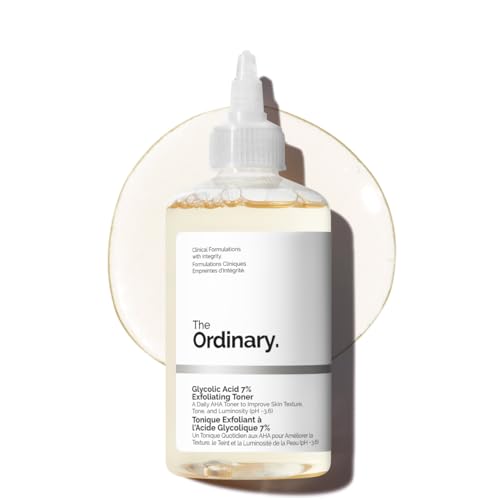
The Ordinary Glycolic Acid 7% Exfoliating Toner is not an every-night product for most melanin-rich skin over 40. But used one to two times per week on skin that’s been properly prepped with barrier support, it does move the needle on texture and helps existing dark marks fade faster. Treat it like a scalpel, not a mop. Apply, don’t swipe repeatedly, and follow with something that actively replenishes the barrier.
For anyone whose skin is currently in a reactive or sensitized phase, The Sensitivity Reset, rebuilding a compromised skin barrier, covers how to stabilize before you reintroduce any exfoliation at all.
What Helps Hyperpigmentation During Menopause?
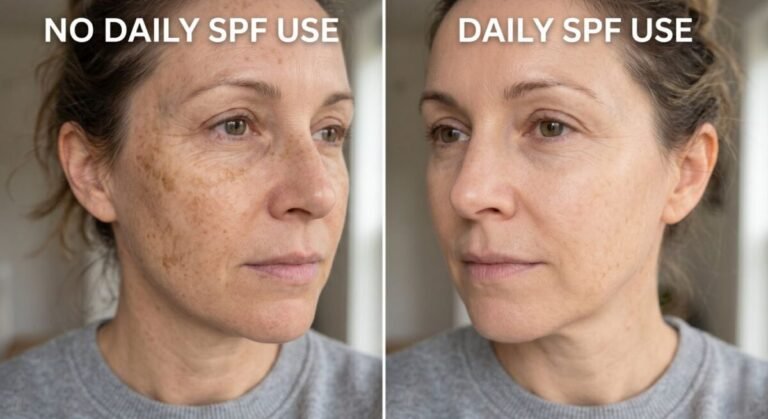
A direct answer, because this is the question most women in this situation are typing into search bars at midnight: a consistent combination of targeted brightening actives (vitamin C, niacinamide, tranexamic acid), low-and-slow exfoliation, and daily SPF. Not SPF when you remember. Not SPF on beach days. Every single morning, regardless of weather, regardless of whether you’re leaving the house. UV exposure — including incidental light through windows — directly worsens hormonal hyperpigmentation and undoes every brightening product you apply underneath.
This is where a lot of existing advice fails the melanin-rich skin audience specifically: the SPF recommendations skew toward formulas that leave a white cast on darker skin, or tinted formulas that only address lighter to medium tones.
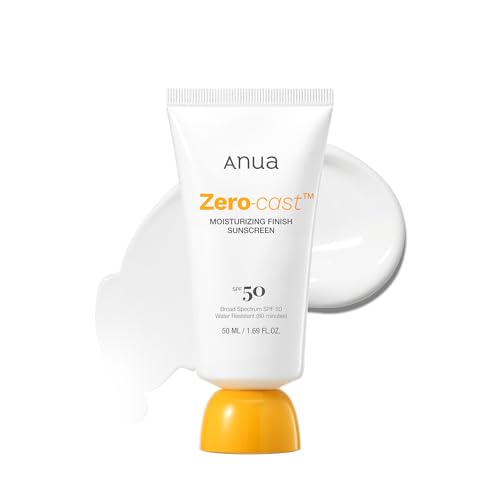
Anua Zero-Cast Moisturizing Sunscreen SPF 50 is called “zero-cast” and actually means it. It sits beautifully under makeup, doesn’t pill, and doesn’t require three minutes of blending to disappear into deeper skin tones. For a morning routine that already has multiple steps, a face SPF that cooperates this well is not a minor detail.
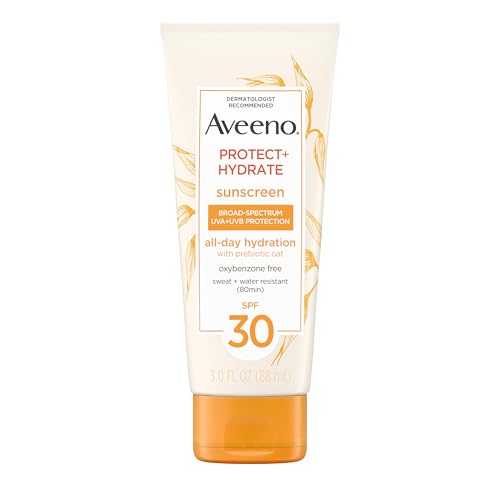
For the body — because menopause doesn’t only rearrange the skin on your face, and hyperpigmentation on the arms, chest, and décolletage is equally real — Aveeno Protect + Hydrate Body Sunscreen Lotion SPF 60 is the one that actually gets used all over. It absorbs without stickiness, hydrates without heaviness, and SPF 60 gives you a buffer that makes sense for skin that’s both photosensitive from hormonal shifts and more prone to marking when sun-damaged.
Who This Routine Is For
Anyone with melanin-rich skin who is navigating perimenopause, menopause, or the post-menopausal skin landscape and has found that the standard advice — the general women-over-40 content, the retinol-forward protocols, the glycolic acid evangelism — hasn’t been translating. You’re not doing anything wrong. You’ve been working from instructions written for someone else’s skin.
This approach also works well for anyone new to treating hyperpigmentation who wants to start with a regimen that reduces PIH risk rather than adding to it. The barrier-first, gentle-actives methodology isn’t a soft option. It’s a more strategically sound one for skin that holds onto inflammation.
The Verdict
The skin science is real: estrogen loss genuinely disrupts melanin production in ways that are more consequential for darker skin tones, and the clinical and editorial conversation hasn’t caught up yet. But the routine that addresses it isn’t complicated. It’s targeted, it’s gentle, and it takes SPF seriously in ways that actually work on a range of deeper complexions.
Start with your barrier. Add actives that address pigmentation without increasing inflammation risk. Protect what you’re building every single morning. Be patient with the timeline — hormonal pigmentation didn’t arrive overnight, and it won’t leave that way either.
But it will leave.
Shop This Post

Discover more from The Harpy Nest
Subscribe to get the latest posts sent to your email.