
How Menopause Changes Your Skin and Exactly What to Do About It
This post contains affiliate links. If you buy through them, I may earn a small commission — at no extra cost to you.
Menopause skin changes are real, specific, and staged. Here’s how to map what’s happening in your skin right now to the ingredients that actually help.
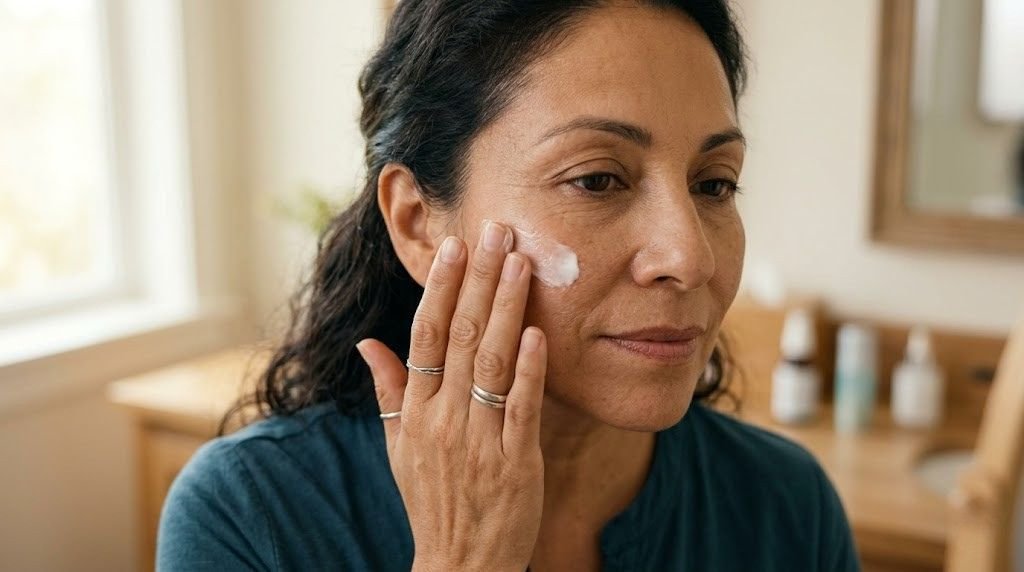
Every article about menopause skin changes does the same thing. It lists the symptoms, throws in a stock photo of a woman touching her cheek with a worried expression, and ends with something like “talk to your dermatologist.” Helpful. Thank you. Deeply useful content.
This post is not that.
What I want to do here is map what is actually happening to your skin, hormonally and structurally, to what you can actually do about it. Not in vague strokes. Specifically. Because how menopause affects your skin depends entirely on where you are in the process, which products you reach for matters, and the timing of those choices matters too. Estrogen decline is the root cause of nearly every menopause skin change you will experience, but estrogen does not simply switch off one afternoon. It fluctuates, drops, spikes, drops again, and eventually settles into a new low. Your skin responds to all of it, and the response is different at each stage.
Perimenopause vs. Postmenopause: Your Skin Is Not the Same at Both Stages
This distinction matters more than most skincare content acknowledges, so I want to be clear about it upfront.
Perimenopause is the transitional phase. Your ovaries are still producing estrogen, but production is erratic. Levels fluctuate wildly, sometimes from week to week. You may still be cycling, though irregularly. Because androgens (testosterone and its relatives) remain relatively stable while estrogen swings up and down, there are stretches where androgens are effectively running the show. That hormonal imbalance is why perimenopause skin changes tend to skew toward acne, oiliness in some zones paired with dryness in others, and heightened sensitivity. It is a confusing combination, and it is not your imagination.
Postmenopause begins twelve months after your last period. Estrogen is no longer fluctuating. It is simply low, consistently, chronically low. The androgen-dominant drama of perimenopause quiets down. What takes over is the slow, steady consequence of low estrogen: dryness, thinning, accelerated collagen loss, and a barrier that no longer does its job the way it used to.
Knowing which stage you are in helps you understand why your skin is doing what it is doing. [INTERNAL LINK: perimenopause symptoms overview] If you are breaking out and also uncomfortably dry and also reacting to things that never bothered you before, you are probably in the thick of perimenopause. If the acne has largely resolved but your skin feels perpetually parched and is suddenly showing texture and creasing you did not see a year ago, you have likely crossed into postmenopause territory. Neither is better or worse. They just require different strategies.
Is Menopause Making Your Skin Dry, Or Is Something Else Going On?
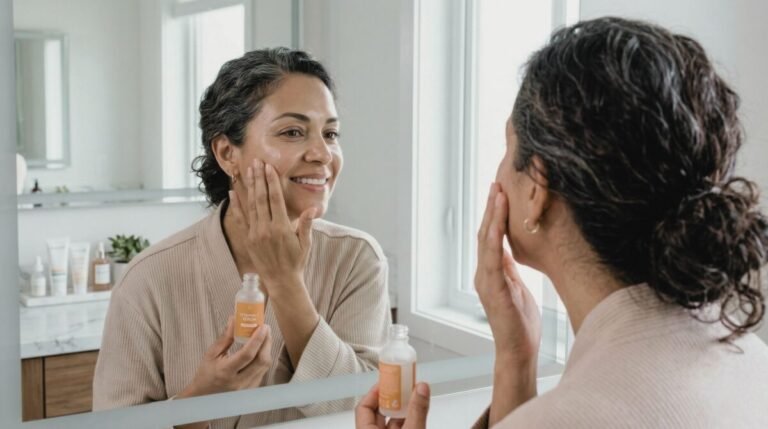
Estrogen does two things for skin hydration that we do not fully appreciate until they start to go. It regulates sebum production, keeping oil levels balanced. And it directly stimulates hyaluronic acid synthesis in the dermis, the layer of skin below the surface where moisture is actually stored and held. When estrogen drops, both of those functions decline. You lose some of the oil that keeps your surface protected, and you lose some of the internal architecture that binds water to your tissue. The result is skin that feels tight, looks dull, flakes at the corners of your nose, and probably stings when you apply something that would have been totally fine two years ago.
Menopause and dry skin are not coincidentally related. They are mechanistically linked. And while we are here: if your skin has started to itch, not from a product reaction or an allergy but a persistent, low-grade itch across the arms, legs, or torso, that is also estrogen-related. Pruritus in menopause is a direct consequence of barrier dysfunction and the skin’s declining ability to retain moisture. It is not a separate problem. It is the same problem presenting differently.
What Your Barrier Actually Needs Now
The intervention is not more water. It is a replenished barrier that can actually hold moisture in. That means ceramides and hyaluronic acid, ideally together, in formulations that do not strip or irritate.
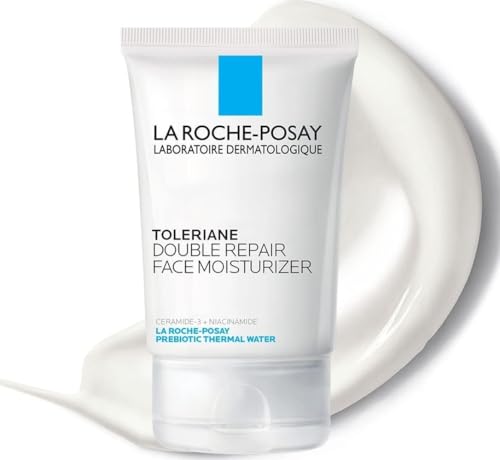
For daytime, I use La Roche-Posay Toleriane Double Repair Face Moisturizer. It has ceramides, niacinamide, and a prebiotic component, and it sits comfortably under SPF without pilling. It is not glamorous. It is the skincare equivalent of a reliable structural wall, and I have stopped apologizing for caring about that.
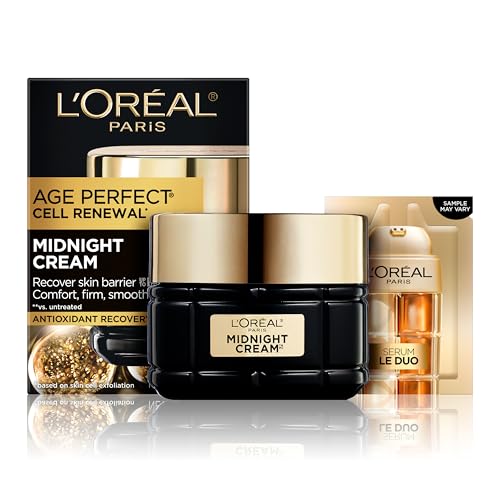
At night, L’Oreal Paris Age Perfect Anti-Aging Midnight Cream does the overnight repair work. It is richer, designed specifically for mature skin, and I wake up with my face actually feeling like it belongs to me.
I will say this because I think it matters: I did not land on these two products immediately. I found things that worked and then they stopped working, or they worked in one season and not another, or they worked on the version of my skin I had eighteen months ago and not the skin I have now. That is not failure. A product not being the right fit is information. It tells you something about what your skin needs at this particular moment. That reframe, genuinely, changed how I approach this.
Does Menopause Cause Acne? Yes, and Here Is Why It Hits Differently
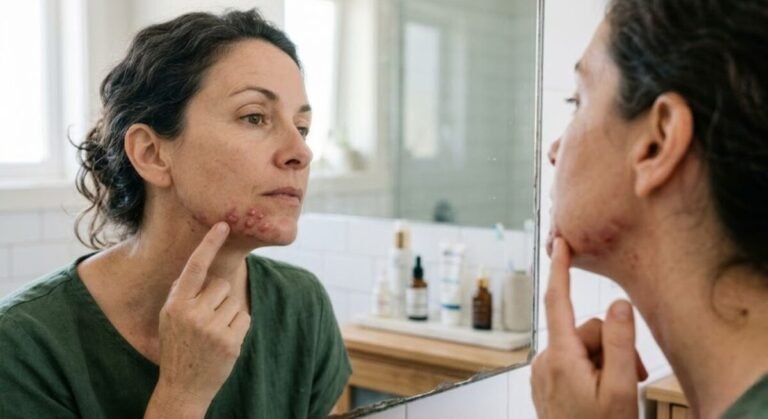
It does, and the mechanism is almost insultingly unfair. During perimenopause, when estrogen is fluctuating rather than consistently present, androgens take up more relative space. Testosterone and its derivatives stimulate sebum production and can trigger follicular congestion. The result is adult acne that tends to appear along the jawline and chin, runs deeper and more cystic than the surface-level breakouts of your twenties, and takes much longer to resolve.
Here is the part that conventional acne advice completely misses: this acne often exists simultaneously with dryness elsewhere on the face. You may have a cystic breakout on your chin and flaking skin across your cheeks at the same time. Reaching for the sulfate-heavy cleanser or the salicylic-acid-loaded toner that cleared your skin at twenty-three is actively counterproductive now. It will strip the dry areas, compromise your already-struggling barrier, and trigger more inflammation, which can make both the acne and the dryness worse.
Menopause acne is not teenage acne wearing different clothes. It requires a different approach entirely.
Cleaning Without Stripping
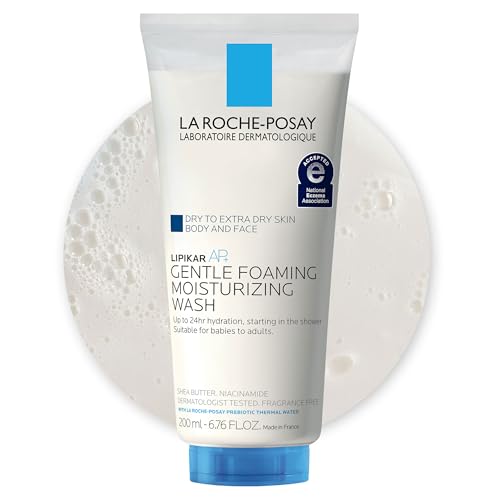
The cleanser question matters more than people think. You want something gentle enough not to disturb your barrier on the dry zones, non-comedogenic so it does not add to the congestion problem, and formulated for adult skin. A gentle, non-comedogenic cleanser used consistently is less dramatic than a clarifying product, but clarifying products were making things worse for me before I accepted that.
→ Speaking of which: hormonal acne in your 40s
Sensitivity, Redness, and the Rosacea-Adjacent Problem Nobody Warned You About
Your skin tolerated your entire routine for years. Then it did not. You did not change anything. The products are the same. But your face is reacting to them, or reacting to wine, or reacting to heat, or reacting for no reason you can identify on a Tuesday.
This is both a perimenopause and a postmenopause problem, but the mechanisms differ slightly. In perimenopause, vasomotor instability (the same system responsible for hot flashes) causes flushing and vascular reactivity that shows up as redness and sensitivity. In postmenopause, thinning skin and a compromised barrier mean there is less structural protection between your nerve endings and whatever is touching them. The skin changes during menopause that affect collagen also affect the vascular structures in the dermis. Less estrogen means less support for those blood vessels, which makes them more visible and more reactive.
If your redness is new, persistent, or patterned across the nose and cheeks, it is worth mentioning to a dermatologist because rosacea is a separate condition that can be triggered or worsened by menopause. But even without a formal diagnosis, calming the skin during this period means simplifying, not intensifying, your active routine.
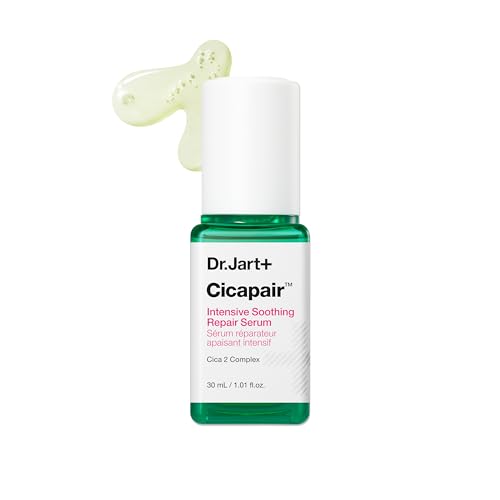
A redness-calming treatment, used in place of a heavier serum on reactive days, can be enough to let the skin settle. The instinct is to add something to fix it. Sometimes the right move is to take something away.
What Actually Works for Menopause Wrinkles and Collagen Loss
Estrogen directly stimulates collagen synthesis. That is not a metaphor or a vague correlation. Estrogen binds to receptors in fibroblasts, the cells responsible for producing collagen, and signals them to keep working. When estrogen drops, fibroblast activity slows. Studies suggest skin loses roughly thirty percent of its collagen in the first five years of postmenopause, with the rate gradually slowing after that. The wrinkling and sagging that feel like they arrived overnight are not imagined: the structural scaffolding underneath your skin is genuinely and measurably changing.
Menopause wrinkles are a collagen and elastin story, not just a hydration story. Which means moisturizer alone, no matter how good, is not going to address them at the level they need to be addressed.
The Case for Retinoids (And How to Actually Use Them Without Torching Your Face)
Retinoids remain the most evidence-backed ingredient for stimulating collagen production and accelerating cell turnover in mature skin. They work. They are also the ingredient most likely to cause the kind of irritation and barrier disruption that menopausal skin least needs, if you use them wrong.
Wrong means starting at a high concentration. Wrong means using them nightly from the beginning. Wrong means layering them with exfoliating acids or vitamin C in a misguided attempt to do everything at once.
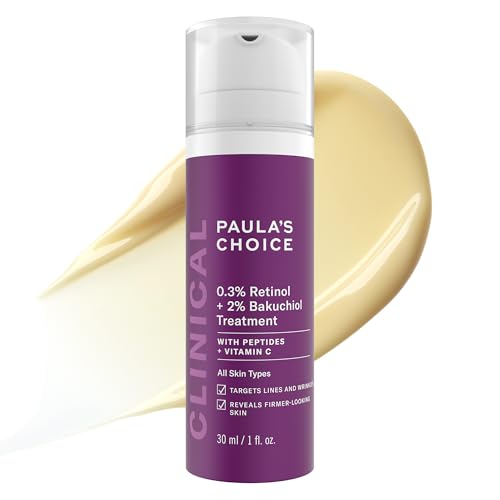
For sensitive mature skin, start low and go slow: a retinol formulated specifically for sensitive or mature skin, used once or twice a week, buffered by applying your moisturizer first. Yes, moisturizer first, then retinol. It slows absorption slightly and dramatically reduces the irritation that sends people abandoning the category entirely after two weeks.
Peptides As the Long Game
Peptides work differently than retinoids. Where retinoids essentially push the skin into producing collagen by speeding turnover, peptides signal fibroblasts directly by mimicking the amino acid sequences that tell the skin to build. They are gentler, layerable with almost everything, and particularly useful if your skin is too reactive right now to tolerate retinoids.
A peptide serum used consistently is a slower payoff, but it is cumulative. And it does not require you to rebuild your barrier from scratch every time you use it.
→ Down the rabbit hole: how to build an anti-aging skincare routine
What Is the Best Skincare Routine for Menopausal Skin?
The best menopausal skincare routine is not the most complicated one or the one with the most actives. It is the one that does the following, in order of priority: repairs and maintains the barrier, delivers consistent hydration, supports collagen production with actives your skin can tolerate, and calms rather than provokes sensitivity.
In practice: a gentle cleanser, a ceramide and hyaluronic acid moisturizer for daytime under SPF (SPF is not optional; UV exposure accelerates everything menopause is already doing to your collagen), a peptide serum, retinol worked in gradually at night, and a richer repair moisturizer overnight. That is not ten steps. That is a focused routine with a clear logic behind each product.
→ You’ll want this one too: best moisturizers for dry mature skin
As for whether you can reverse any of this: partially. You cannot restore premenopausal estrogen levels through skincare. That is honest and I think you deserve to hear it plainly. What you can do is meaningfully slow the rate of collagen loss, restore barrier function to something close to what it was, and improve the visible texture, hydration, and tone of your skin in ways that are real and measurable. The skin is adaptive. It responds to good inputs even when the hormonal environment has changed. That is not nothing. That is actually quite a lot.
The Verdict
Menopause skin changes are not a single problem with a single solution. They are a cascade of related changes driven by one root cause, estrogen decline, expressed differently depending on your hormonal stage and your skin’s individual history. Perimenopause skin changes and postmenopause skin changes overlap but are not identical, and the ingredients that help most are not the same across the board.
The most useful thing I can tell you is this: find out what is actually happening in your skin right now, not what happened five years ago. Match the intervention to the specific problem. Be willing to revise. A product that does not work for your skin is not an indictment of you. It is a data point. Collect enough of them and you will find what does.
Shop This Post


Discover more from The Harpy Nest
Subscribe to get the latest posts sent to your email.