
Hormonal Acne Over 40 Solutions
This post contains affiliate links. If you buy through them, I may earn a small commission — at no extra cost to you.
You did everything right. You washed your face, used the benzoyl peroxide your dermatologist recommended at 22, and kept buying the same drugstore products that worked decades ago. Now you’re 43 or 48 or 52, and your skin is breaking out along your jawline like clockwork, the cysts hurt, and every “acne treatment” you’ve tried has left your skin drier, redder, and more irritated than before. Hormonal acne after 40 is its own beast, and it does not respond to teenage acne logic. The root cause is different, the skin is different, and the treatments that work are genuinely different. What follows is a complete treatment roadmap built specifically for mature skin, covering everything from drugstore topicals to prescriptions to in-office procedures. Every affiliate relationship on The Harpy Nest is fully disclosed, and nothing here is recommended because a brand paid for placement.
Key Takeaways
- What this covers: A complete treatment roadmap for hormonal acne in women over 40, from topicals to prescriptions to in-office treatments.
- Who it’s for: Women 40+ experiencing jawline and chin breakouts, cystic nodules, or persistent acne linked to perimenopause or menopause.
- What affects treatment success: Hormone imbalance severity, skin barrier strength, consistency of product use, and diet and lifestyle factors.
- How The Harpy Nest differs: Written specifically for mature skin by someone who tests products under real conditions; every affiliate relationship is disclosed upfront.
- Treatment timeline: What to expect from two weeks (initial changes) to six months (full results).
- How to start: Identify your acne type, choose your treatment tier (OTC vs. prescription), and begin a consistent routine.
Who Actually Needs Hormonal Acne Treatment Over 40
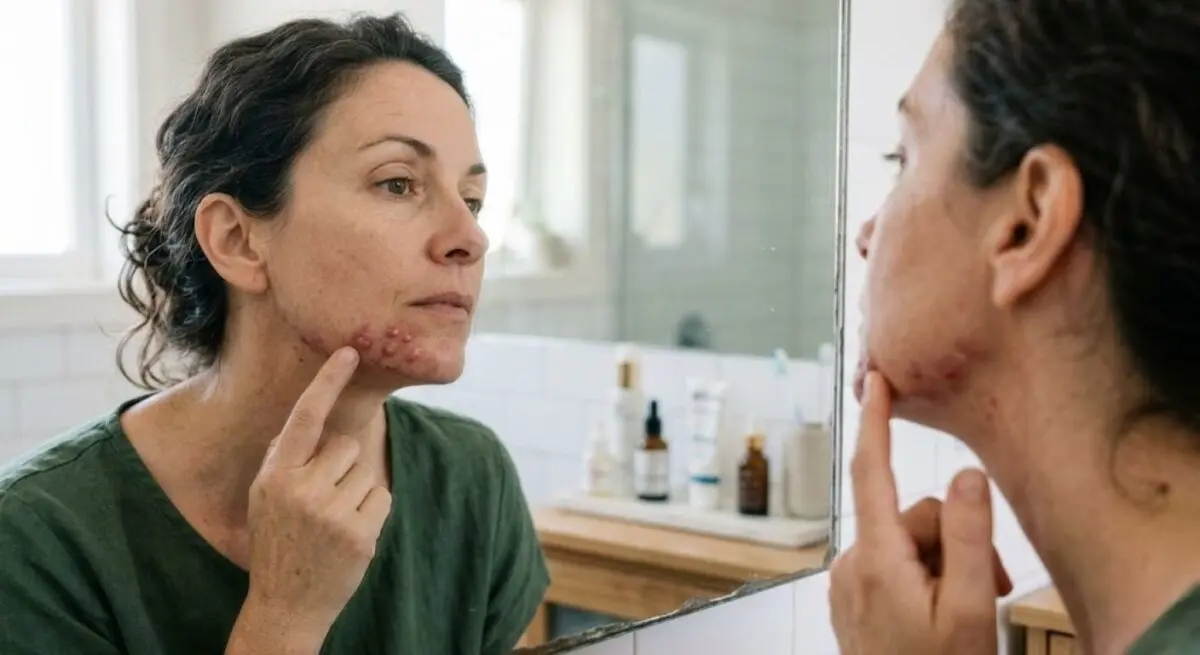
Not every adult breakout is hormonal acne, but there’s a recognizable pattern that most women over 40 know well. The classic hormonal acne pattern is deep, cystic, painful nodules along the lower face, primarily the jawline and chin. These aren’t surface-level whiteheads. They sit under the skin for days or weeks, they hurt to touch, and when they finally resolve, they leave behind dark spots that take months to fade on mature skin.
If your acne started or significantly worsened between ages 40 and 55, perimenopause is a likely driver. Fluctuating and declining estrogen creates an androgen imbalance that directly triggers oil overproduction. The oil itself becomes thicker with age, which means pores clog more easily and breakouts run deeper than they did at 20. Women who’ve tried benzoyl peroxide or salicylic acid products designed for teenage acne often find those treatments strip their skin barrier without actually clearing the acne, which makes everything worse.
This pattern affects women across all skin types: oily, dry, combination, and sensitive. Post-inflammatory hyperpigmentation (the dark marks left behind after breakouts) is a particular problem for mature skin because cell turnover slows with age, so those spots linger far longer than they would have in your twenties.
Treatment Options for Mature, Acne-Prone Skin
Topical Treatments (Over-the-Counter)
Topical treatments are the right starting point for most women, especially those with mild to moderate hormonal acne or sensitive skin that can’t handle prescription medications yet. They’re also the maintenance layer after prescription treatment gets breakouts under control. The key difference for women over 40 is ingredient selection: the best OTC combo for mature skin is azelaic acid paired with retinol, not the benzoyl peroxide and salicylic acid products built for teenage oily skin. Success depends on daily use for three to six months, pairing active ingredients with a barrier-repair moisturizer, and not over-exfoliating a skin barrier that’s already more vulnerable than it was at 25.
Azelaic acid is the standout ingredient for hormonal acne in women over 40 because it addresses three problems at once: it unclogs pores, kills acne-causing bacteria, and fades post-inflammatory hyperpigmentation without the harshness of benzoyl peroxide. It’s gentle enough for sensitive skin, won’t cause a purging phase, and is safe even during pregnancy. Use it as a serum or treatment in the morning at 10 to 20 percent concentration. Paired with retinol, it covers both hormonal acne and the aging concerns that come alongside it: azelaic acid handles inflammation and dark spots in the morning while retinol handles cell turnover and anti-aging at night.
Retinoids and retinol treat hormonal acne while simultaneously addressing the sluggish cell turnover that makes mature skin dull and prone to clogging. Start with retinol two to three nights per week using the sandwich method (moisturizer first, then retinol, then moisturizer) to reduce irritation. Expect some dryness and possible purging in the first four to six weeks; this is normal and not a reason to stop. Prescription tretinoin is the strongest and most studied option if you can get it from a dermatologist.
Niacinamide belongs in almost every over-40 acne routine because it strengthens the skin barrier while controlling oil and reducing redness. Apply it as a five to ten percent serum in the morning. It layers well with azelaic acid and SPF and helps offset the barrier disruption that active acne ingredients can cause.
A word on benzoyl peroxide: it’s effective against acne bacteria, but it can damage weaker mature skin barriers when used as a leave-on cream. If you want to use it, stick to a five percent cleanser, leave it on for 30 to 60 seconds, then rinse. Don’t use it on the same nights you apply retinoids.
Prescription Medications
When OTC topicals haven’t moved the needle after three to four months, when breakouts are deep and cystic, or when scarring has started, prescription medications are the next step. These treatments target the hormonal root cause rather than surface symptoms.
Spironolactone is the most effective prescription treatment for hormonal acne in women over 40. It’s an oral medication that blocks androgen receptors in the sebaceous glands, directly stopping the hormonal signal that triggers excess oil production. It’s FDA-recognized for acne in perimenopause and menopause, the generic version is often under $20 per month, and most side effects are mild and settle within the first month. The typical starting dose is 50 to 100 mg daily, with some women needing up to 200 mg. Oil production can drop 30 to 50 percent over three to six months of consistent use.
Spironolactone does require monitoring. Up to 16 percent of women over 45 experience elevated potassium levels, so your doctor should check potassium at one month and again at three months. Common side effects include frequent urination (29 percent of users), menstrual irregularities (22 percent), and breast tenderness (17 percent); most settle within the first month. Avoid pregnancy while on spironolactone because it can feminize a male fetus.
Other prescription options include low-dose doxycycline for short-term inflammation control during severe flares, hormone replacement therapy (HRT) for women in full menopause who want to address both acne and other menopausal symptoms, and FDA-approved birth control pills (Ortho Tri-Cyclen, Yaz, Beyaz, Estrostep Fe) for women still in perimenopause who also need contraception. These are conversations to have with your OB/GYN or dermatologist, not decisions to make based on a blog post alone.
In-Office Dermatologist Treatments
Some cases of adult hormonal acne need more than what you can apply at home, particularly when topicals and prescriptions aren’t enough on their own, when you want anti-aging benefits alongside acne treatment, or when a severe flare needs fast resolution.
Chemical peels using glycolic acid, salicylic acid, or retinoid solutions treat both acne and visible aging at the same time. They exfoliate congestion, regulate oil production, and diminish fine lines and sun damage. Most women need three to six sessions spaced four to six weeks apart, with maintenance every three to six months.
Microneedling is particularly useful for post-acne marks and weakened skin barrier. Tiny needles stimulate collagen production, strengthen the barrier, and reduce post-inflammatory hyperpigmentation. Blue light therapy kills acne-causing bacteria without chemicals or barrier irritation, making it a good option for sensitive skin that can’t tolerate topical treatments. Steroid injections can resolve a painful nodule in 24 to 48 hours and prevent scarring, though they should be used selectively because high doses can cause skin dimpling.
Diet and Lifestyle Changes
Diet is not a standalone treatment for moderate or severe cystic acne, but it does meaningfully affect how well everything else works. Studies show a 16 percent higher acne risk with regular milk consumption, and women who cut dairy for one to two months often see a noticeable reduction in breakouts. The mechanism is real: dairy increases insulin and IGF-1, which activate androgens and increase oil production. Skim milk may actually be worse than whole milk in this regard.
High-sugar foods spike blood sugar and insulin, triggering the same androgen cascade. Research has found people eating high-fat, high-sugar meals are up to eight times more likely to report acne. Whey protein is also worth cutting if you use it; it’s linked to acne onset in the 18 to 45 age group. On the other side of the equation, anti-inflammatory foods help: leafy greens, fatty fish, berries, and green tea can support clearer skin alongside your topical and prescription treatments.
Stress management matters because cortisol worsens hormonal imbalances. Poor sleep (under seven hours) increases cortisol and slows skin healing. None of these are dramatic interventions, but they’re the factors that can move someone from 70 percent improvement to 90 percent improvement on the same treatment protocol.
If this landed somewhere real, the Coven is where the conversation continues. Join us below.
What to Expect in Your Treatment Process
Getting from where you are now to significantly clearer skin takes time, and knowing the timeline helps you stay consistent rather than abandoning a treatment that’s actually working.
Weeks one and two are about identifying your acne type and starting with a simple, gentle routine. If you have cystic jawline breakouts, spironolactone is worth discussing with a dermatologist sooner rather than later. If breakouts are surface-level, start with azelaic acid in the morning, a gentle cleanser, barrier-repairing moisturizer, and SPF.
Weeks two through four bring in retinol or prescription treatment. Add retinol two to three nights per week using the sandwich method, or start spironolactone at 50 to 100 mg daily if you’ve seen a dermatologist. Some initial dryness is normal; severe irritation means you need to back off the frequency or concentration.
Months two and three are when things start visibly shifting. Spironolactone typically shows meaningful breakout reduction at the two to three month mark. Retinoid purging usually peaks and subsides around weeks six to eight. Oil production decreases, and older dark spots begin to fade with consistent azelaic acid use.
Months three through six deliver full results for most women: a 70 to 90 percent reduction in breakouts, smoother texture, refined pores, and substantially faded dark spots. By month six, most women are in maintenance mode rather than active treatment mode. If you’re on spironolactone, your doctor should follow up at one month for potassium monitoring, then again at three months. If you’re using OTC topicals only, move to a dermatologist appointment if you’re not seeing improvement at three months.
What Affects Your Hormonal Acne Treatment Success
Results vary. Knowing why helps you set realistic expectations and make adjustments when needed.
- Hormone imbalance severity: Mild estrogen decline may respond well to OTC topicals; a major perimenopause shift often needs spironolactone plus topicals working together.
- Acne type: Surface whiteheads respond to OTC treatments; deep cystic nodules typically require prescriptions or steroid injections.
- Skin barrier strength: Weaker mature skin barriers mean more irritation from harsh treatments; azelaic acid over benzoyl peroxide, gentle cleansers over foaming strippers.
- Consistency of product use: Topicals require daily use for three to six months. Skipping regularly means the data you’re getting at month three isn’t accurate.
- Diet triggers: High sugar and dairy intake can undermine otherwise effective treatment.
- Stress and sleep: High cortisol worsens the hormonal imbalance at the root of the problem; poor sleep slows skin healing.
- Sun protection: Skipping SPF deepens dark spots, worsens inflammation, and increases retinoid sensitivity.
- Age within the over-40 range: Women in early perimenopause (40 to 45) may respond well to birth control pills; women in full menopause (50+) tend to do better with spironolactone or HRT.
Your Complete Daily Skincare Routine for Hormonal Acne Over 40
Mature, acne-prone skin needs active ingredients and barrier repair working together, not against each other.
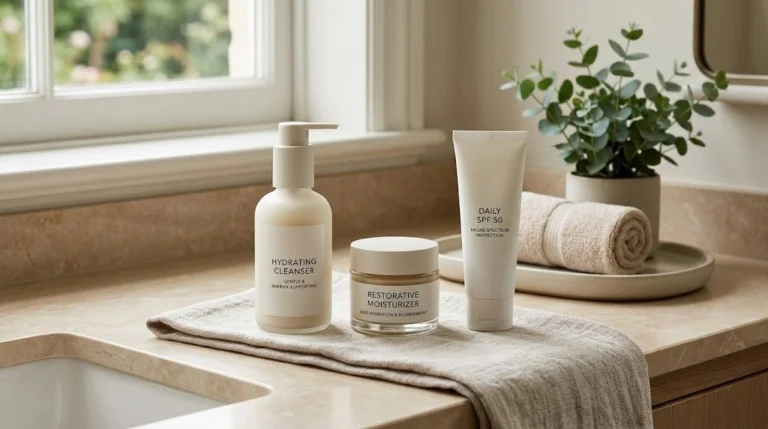
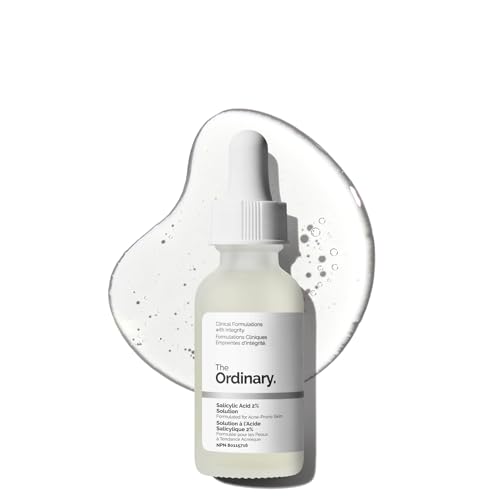
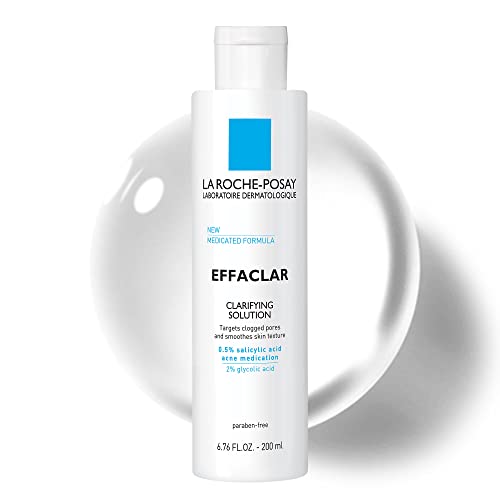
Morning: Start with a gentle cleanser (salicylic acid at 0.5 to 2 percent for oily or combination skin, or a creamy hydrating cleanser if your skin runs dry). Follow with azelaic acid or niacinamide serum, then a lightweight, oil-free or gel-based barrier-repairing moisturizer. Finish with SPF 30 to 50, broad-spectrum, every single morning without exception. UV inflammation worsens both acne and post-inflammatory hyperpigmentation, and retinoids increase sun sensitivity, so SPF is non-negotiable.
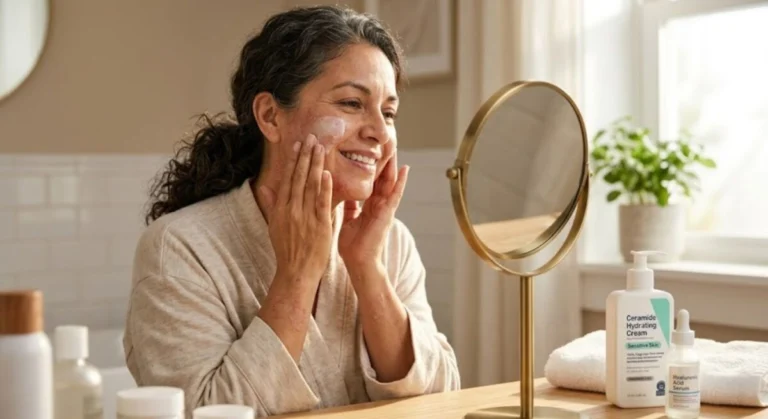
Night: Cleanse to remove SPF, oil, and debris. Apply retinol two to three nights per week using the sandwich method. On nights you skip retinol, a niacinamide serum or gentle exfoliating toner keeps cell turnover moving without over-stressing the barrier. Finish every night with a barrier-repairing moisturizer containing ceramides, niacinamide, and hyaluronic acid.
Weekly additions can include a two-percent salicylic acid BHA exfoliant once per week to deeply unclog pores (skip on retinol nights) and a kaolin or charcoal clay mask to draw out oil and impurities.
How to Start Your Hormonal Acne Treatment Plan
Step 1: Identify your acne type. Jawline and chin cystic nodules are classic hormonal acne and point toward spironolactone as a treatment to discuss with your dermatologist. Surface whiteheads and blackheads often respond to OTC salicylic acid plus azelaic acid. Deep, painful cysts that won’t move are candidates for a steroid injection.
Step 2: Choose your treatment tier. OTC-only works for mild to moderate acne: start with azelaic acid, retinol, gentle cleanser, and SPF. Prescription treatment means seeing a dermatologist for spironolactone, and it’s the right call for moderate to severe or cystic acne. Combined treatment (topicals plus spironolactone plus in-office peels) is best for stubborn cases with scarring.
Step 3: Begin a consistent routine. Morning: cleanser, azelaic acid or niacinamide, moisturizer, SPF. Night: cleanser, retinol two to three times per week, barrier-repairing moisturizer. Weekly: limit dairy and sugar, manage stress, aim for seven to nine hours of sleep.
Step 4: Monitor and adjust. Some dryness and purging in the first month is normal with retinoids. Breakouts should decrease meaningfully by month three. Full results take up to six months. If you’re not seeing improvement at three months of consistent OTC use, it’s time to see a dermatologist for prescription options.
Frequently Asked Questions About Hormonal Acne
Q: How much does hormonal acne treatment cost over 40?
A: OTC topicals (azelaic acid plus retinol) typically run $30 to $80 per month. Generic spironolactone is often $20 to $50 per month. A dermatologist visit runs $150 to $400 for the initial appointment and $100 to $200 for follow-ups. In-office treatments like chemical peels and microneedling run $200 to $600 per session, with most protocols requiring three to six sessions.
Q: How long does it take to see results from hormonal acne treatment?
A: OTC topicals can show initial changes in two to four weeks, with full results at three to six months of daily use. Spironolactone typically reduces oil production within one to two months and decreases breakouts noticeably by the two to three month mark, with full effects at three to six months. In-office chemical peels often show improvement after one to two sessions, with full results after three to six.
Q: Is spironolactone safe for women over 45?
A: Yes, with monitoring. Spironolactone is well tolerated by most women, but because elevated potassium affects up to 16 percent of women over 45, your doctor should check potassium levels at the one-month and three-month marks. Most side effects (frequent urination, menstrual irregularity, breast tenderness) settle within the first month. Avoid pregnancy while taking it.
Q: Can I use benzoyl peroxide if I have mature, sensitive skin?
A: With caution. Benzoyl peroxide is effective against acne bacteria, but it strips the skin barrier and can cause significant dryness and irritation on mature skin. If you want to use it, choose a five percent cleanser rather than a leave-on cream, limit use to once daily, and always follow with a barrier-repairing moisturizer. Azelaic acid is generally the better choice for sensitive mature skin because it’s gentler and equally effective against acne-causing bacteria.
Q: Will hormonal acne go away after menopause?
A: Not necessarily. Many women experience persistent acne through and after menopause because of ongoing androgen dominance even after estrogen has stabilized. Some women do see improvement once hormone levels settle post-menopause, but others continue needing treatment long-term.
Q: Does dairy really cause hormonal acne?
A: Research supports the connection. Studies show a 16 percent higher acne risk with milk consumption, with skim milk potentially worse than whole milk. Dairy increases insulin and IGF-1, which activate androgens and oil production. Cutting dairy for one to two months is one of the more straightforward dietary changes with a measurable payoff for persistent adult acne.
Q: Should I see a dermatologist for hormonal acne over 40?
A: Yes, if any of these apply: acne has persisted for more than two months, scarring is occurring, breakouts are painful and cystic, OTC treatments have failed after three to four months, or dark spots are lingering for months. A dermatologist can prescribe spironolactone, tretinoin, or adapalene, and can offer in-office treatments including chemical peels, blue light therapy, and steroid injections for individual cysts.
Q: Can azelaic acid and retinol be used together?
A: Yes, and they’re actually the ideal combination for over-40 skin. They don’t conflict and they address different parts of the problem. Use azelaic acid in the morning (anti-inflammatory, fades dark spots, kills bacteria) and retinol at night (unclogs pores, speeds cell turnover, anti-aging). Together, they cover hormonal acne and the aging concerns that come alongside it.
Final Thoughts
Hormonal acne over 40 is not a willpower problem or a hygiene problem; it’s a hormone problem, and it responds best to treatments that actually address the hormone-driven root cause rather than just surface bacteria. The right combination of azelaic acid and retinol as your topical foundation, spironolactone if OTC isn’t enough, dietary adjustments that reduce androgen-triggering foods, and daily SPF without exception can move most women from persistent cystic breakouts to significantly clearer skin within three to six months.
Mature skin heals slower, reacts more sensitively to harsh treatments, and has different needs than younger acne-prone skin. Working with that reality, not against it, is what makes the difference. When you stop the cycle of barrier-stripping treatments and start giving mature skin what it actually needs, the results often go beyond acne control: dark spots fade, texture smooths, fine lines improve from consistent retinoid use, and your skin stops feeling like a problem that needs constant management.
Discover more from The Harpy Nest
Subscribe to get the latest posts sent to your email.