
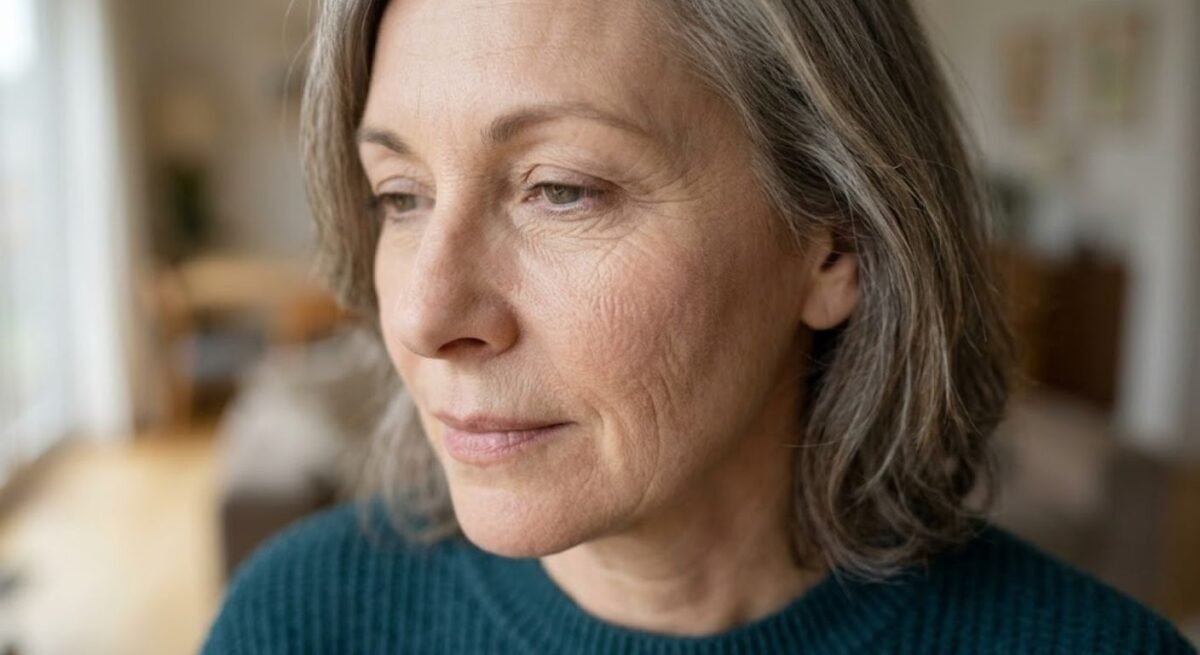
How Menopause Changes Your Skin
This post contains affiliate links. If you buy through them, I may earn a small commission — at no extra cost to you.
Your skin used to be something you didn’t have to think about too hard. Then one day, it started feeling tight after you washed your face, your moisturizer stopped working the way it used to, and a product you’d used for years suddenly made your face itch. That’s not bad luck. That’s menopause skin, and the dryness and irritation many women experience often trace back to one thing: estrogen pulling back and taking your skin’s support system with it. The barrier dysfunction that comes with estrogen loss can feel like your skin betrayed you overnight, but the shift is gradual and it’s biological. Most women notice these changes starting in perimenopause, sometimes years before their last period. What makes it frustrating isn’t the changes themselves. It’s that most skincare content isn’t written for you. It’s written for a 28-year-old with combination skin, optimized for search clicks, and quietly backed by the brands being recommended. You deserve something more honest than that.
Key Takeaways
- What this covers: A science-backed explanation of how menopause changes skin, plus a practical skincare strategy built for mature skin that actually reflects real-world use.
- Who it’s for: Women in perimenopause or menopause dealing with dryness, wrinkles, sagging, sensitivity, age spots, hormonal acne, thinning skin, or slower wound healing.
- What affects cost: Sun exposure history, skin sensitivity level, and how aggressively you want to support collagen through topicals versus professional treatments.
- How we work: The Harpy Nest tests products under real conditions, discloses every affiliate relationship, and focuses on mature skin needs rather than generic traffic-driven content.
- Timeline: Most visible improvements from topicals appear in 4 to 8 weeks; collagen support takes 3 to 6 months; professional treatments vary by type.
- Where to start: Use the sections below to identify your top skin changes, then match them to products and strategies that fit your current skin.
Why Menopause Changes Your Skin
Menopause officially begins when you’ve gone 12 months without a period, typically between ages 45 and 55, with the average age around 51. The skin changes often start earlier, during perimenopause, when hormone levels become unstable and estrogen begins its decline.
Estrogen is the hormone your skin depends on for almost everything that makes it look and feel healthy. It stimulates collagen production, supports oil and sebum output, maintains the skin barrier, and helps your skin retain moisture. When estrogen drops, all of those functions weaken at once. Your skin produces less oil, holds less water, and repairs itself more slowly. The barrier that used to keep irritants out and moisture in becomes more permeable, which is why dryness and sensitivity often arrive together.
This is not a cosmetic inconvenience. Estrogen’s role in skin health is well-documented by dermatologists, and the changes it drives are measurable. Collagen drops roughly 30% in the first five years after menopause, then continues declining at about 2% per year for the next two decades. That’s a significant structural shift, and it happens whether or not you notice it in the mirror right away.
The 9 Skin Changes That Come With Menopause
Dryness and Dehydration
Dryness is the most common menopause skin change, and it’s usually the first one women notice. As estrogen declines, sebum production slows. With less oil on the surface, skin loses its ability to hold moisture, leading to tightness, flaking, and that itchy, crepey texture that becomes more obvious on the neck, chest, and around the eyes.
Hot showers make it worse faster than most people expect, as does low humidity in winter. Menopause skin dryness differs from regular dry skin because it’s not just about surface dehydration. The barrier itself is compromised, so moisture escapes more quickly and irritants get in more easily.
Loss of Elasticity and Thinning Skin
Collagen loss during menopause is well-established: roughly 30% in the first five years, then a slower decline that continues for decades. Elastin, the protein that lets skin spring back, also decreases. The result is skin that looks less firm, feels thinner, and bruises more easily than it used to.
The loss of collagen and under-skin fat also changes how skin sits on the face, which contributes to sagging along the jawline and neck, and means skin is more fragile and takes longer to recover from minor irritation or injury.
Wrinkles and Fine Lines
Less collagen combined with less moisture means wrinkles deepen. Crow’s feet, lines above the upper lip, forehead lines, and the marionette lines around the mouth become more pronounced. Some of these were always there but stayed soft when skin was hydrated and plump; they become more visible as moisture and collagen support decline.
Dryness makes menopause wrinkles look worse than they actually are in structural terms. When skin is properly hydrated, fine lines can soften noticeably, which is one reason moisturizer is not optional at this stage.
Sagging: Jowls, Slack Skin, and Loss of Contour
Sagging is a different problem from wrinkles and requires different thinking. Loss of collagen, elastin, and the fat pads under the skin leads to sagging at the jawline, lower cheeks, neck, and under the eyes. Jowls form. The nose-to-mouth lines become more permanent. The profile of the face changes.
Menopause sagging skin is largely structural. Topical products can support it, but they can’t replace lost volume or reposition tissue. If sagging is a primary concern, professional treatments offer more direct impact than any cream.
Increased Sensitivity and Irritation
Around age 50, skin pH shifts and the barrier becomes more reactive. Products that worked fine for years can suddenly cause redness, itching, or rashes because the skin changed, not the product.
Hot flashes and night sweats add another layer of disruption. Repeated flushing and sweating can further compromise barrier function and trigger or worsen existing conditions like rosacea, eczema, and psoriasis. Dermatologists note that fragrance, alcohol, and harsh acids become harder for menopausal skin to tolerate, even at concentrations that were previously fine.
Hyperpigmentation and Age Spots
Age spots on the face, hands, neck, arms, and chest become more visible during and after menopause, driven by the combination of hormonal shifts and cumulative sun exposure accumulated over decades. Skin also becomes more translucent as it thins, which makes existing spots, veins, and pigmentation stand out more sharply.
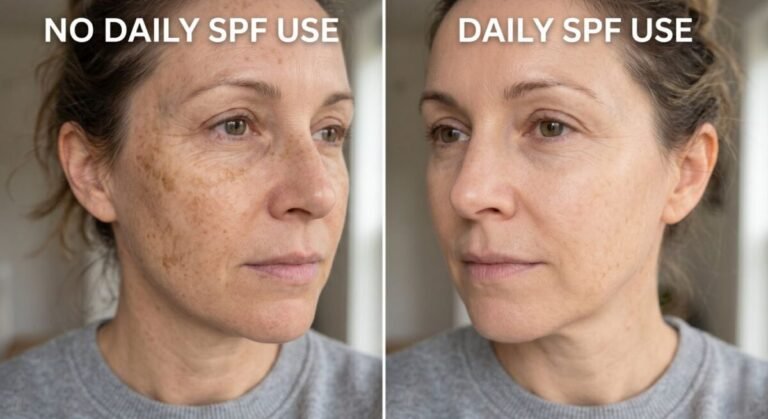
Hyperpigmentation from menopause tends to be stubborn because it’s driven by two separate factors: hormones and UV damage. Addressing one without the other produces limited results, which is why consistent daily SPF is non-negotiable here.
Hormonal Acne in Mature Skin
As estrogen falls and androgens like testosterone remain relatively stable, sebum production can actually increase in some women. This leads to hormonal acne appearing as breakouts on the chin, jaw, and lower cheeks, arriving on skin that may otherwise feel dry.
The challenge is that typical acne treatments designed for oily, teenage skin can be far too aggressive. Benzoyl peroxide, salicylic acid, and drying toners all have a role, but they need to be used carefully on thinner, drier skin to avoid worsening barrier dysfunction.
Slower Wound Healing
Estrogen plays a role in the skin’s repair process. As levels drop, wounds take longer to close and heal, and the risk of irritation or minor infection increases. A small scratch or blemish that once resolved in days can now take twice as long.
This is one reason gentleness matters more at this stage. Harsh actives on already-compromised skin don’t just cause irritation; they create wounds that take longer to recover, and that delay can add to the hyperpigmentation you’re already trying to fade.
Facial Hair and Scalp Hair Changes
Unwanted facial hair under the chin, along the jawline, and above the lip is driven by the same androgen dominance that can cause acne. Scalp hair thinning follows a different pattern, with a widening part or receding hairline that may become more noticeable than overall volume loss. Both are hormone-driven, and both are frustrating in ways topical skincare alone can’t address.
What Makes Menopause Skin Changes Worse
The estrogen drop sets the stage, but several other factors decide how that plays out. Sun exposure history is the biggest one. UV rays break down elastin and accelerate collagen loss, so cumulative lifetime sun damage shows up most clearly during menopause, when the skin’s ability to repair itself has already slowed. This is why two women the same age with the same hormone levels can look very different depending on how much unprotected time they spent in the sun over the years.
Dry environments and low humidity amplify menopause skin dryness, especially in winter. Stress can make skin drier, increase sensitivity, and trigger flares of psoriasis or eczema. High sugar intake, alcohol, caffeine, and ultra-processed foods have been associated with accelerating visible aging, while poor sleep shows up quickly in skin tone, texture, and dark circles.
A Real-World Menopause Skincare Routine
You can’t prevent menopause-related skin changes. What you can do is lessen their impact with consistent, well-chosen care. Most changes are most noticeable in the first five years; after that, the decline becomes more gradual. Consistency matters more than expensive products.
Start With Daily Sun Protection
Daily broad-spectrum SPF 30 or higher is the single most effective step for menopause skin. It slows further collagen and elastin damage and prevents new age spots from forming. It applies in winter, through windows, and on overcast days. Reapply if you’re spending time outdoors, and wear sun-protective clothing and hats when exposure is extended.
Get regular skin cancer screenings. Age spots can look similar to certain skin cancers, and the risk increases with age.
Fix Your Cleansing and Moisturizing Routine
Switch to a mild, creamy cleanser if you haven’t already. Foam and gel formulas strip the moisture that menopausal skin is already struggling to hold. Use lukewarm water only, and apply moisturizer while skin is still slightly damp to help the formula bond and lock hydration in more effectively.
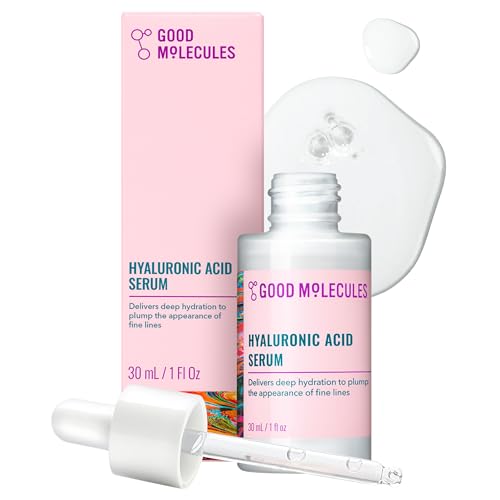
Look for hyaluronic acid or glycerin to draw moisture into the skin, and ceramides to help retain it. Layering a facial oil over your moisturizer adds extra protection, especially at night. For skin dealing with barrier dysfunction from estrogen loss, these aren’t luxury additions; they’re practical tools.
Add Collagen and Firmness Support
Retinol and prescription retinoids are the best-studied topical ingredients for supporting collagen production in mature skin. They improve firmness and texture over time but require a slow introduction, starting one to two nights per week, to avoid the irritation that thinner, more sensitive skin is prone to. Peptides are a gentler alternative that also supports collagen and is easier for sensitive skin to tolerate. Vitamin C supports brightness and collagen production and works well in a morning routine alongside SPF.
Gentle exfoliants like glycolic acid and lactic acid improve texture, fade hyperpigmentation, and keep skin smooth. The key is “gentle” at this stage; overdoing exfoliation when your barrier is compromised creates the exact problems you’re trying to solve.
Handle Sensitivity and Hormonal Acne Carefully
For sensitive skin, fragrance-free and alcohol-free products are the baseline. Calming ingredients like niacinamide, green tea, chamomile, and rosehip can reduce redness and support barrier repair without adding irritation. Patch test anything new before applying it to your full face.
For hormonal acne on mature skin, a salicylic acid cleanser can unclog pores without over-stripping. A selective approach works better than daily use. Benzoyl peroxide works well as a spot treatment. Avoid the harshest acne formulas designed for teenage, oily skin; they’ll damage barrier function and make dryness significantly worse.
Consider Lifestyle Support
Antioxidant-rich foods support skin health from the inside. Soy isoflavones at around 50 mg per day are plant compounds that mimic estrogen’s effects and may help with thinning skin, according to some dermatology research. Regular exercise boosts circulation and reduces stress. Consistent sleep between 7 and 9 hours makes a visible difference in skin tone and reduces dark circles.
When to See a Dermatologist
If topical care isn’t enough, a board-certified dermatologist can offer prescription retinoids for thinning skin, laser treatments for age spots and sagging, laser hair removal for unwanted facial hair, and minoxidil or other options for scalp hair loss. Botox can reduce wrinkle appearance but requires ongoing maintenance.
If your menopause symptoms are severe, including hot flashes, sleep disruption, and vaginal dryness, discuss menopausal hormone therapy (MHT) with your doctor. The evidence is strongest for those systemic symptoms; the skin benefits of MHT are less definitive. It’s worth asking about, but it’s not a skin treatment on its own.
Final Thoughts
Menopause changes your skin in ways that are real, measurable, and connected to biology rather than neglect. Estrogen loss drives dryness, collagen decline, barrier dysfunction, and sensitivity, and those changes are most pronounced in the first five years. Consistent, well-chosen care makes a genuine difference. You don’t need a 12-step routine or a cabinet full of expensive products. You need daily SPF, real hydration, and ingredients that support what your skin has lost.
Skin that’s protected from UV damage, kept hydrated, and supported with collagen-building actives ages more gradually and stays more comfortable. The tightness and sensitivity that comes with estrogen loss can improve significantly when barrier support is prioritized.
At The Harpy Nest, we write specifically for women with mature skin, test products under real conditions, disclose every affiliate relationship, and give you the verdict first. If you’re starting to notice the skin changes that come with perimenopause and menopause, look through our product and routine coverage, find what matches your skin’s current needs, and know that when we recommend something, it’s because it actually worked.
Frequently Asked Questions About Menopause Skin
Q: How much does menopause skincare typically cost?
A: It depends on how many concerns you’re addressing and whether you add professional treatments. Basic topicals (SPF, cleanser, moisturizer) can range from $30 to $150 per month. Adding retinol, peptides, vitamin C, or acids can bring that to $100 to $300 per month. Professional treatments like laser, Botox, laser hair removal, or minoxidil range from a few hundred to several thousand dollars depending on scope and maintenance requirements.
Q: How long does menopause skin improvement take?
A: Most visible improvements from topicals appear in 4 to 8 weeks. Collagen support takes longer, usually 3 to 6 months of consistent use. Professional treatments vary by type and often require ongoing maintenance to sustain results.
Q: Can I prevent menopause skin changes entirely?
A: No. You can’t stop them from happening, but you can slow their progression and lessen their impact. Consistent sun protection, hydration, and collagen support are the three strategies with the strongest real-world evidence behind them.
Q: Are age spots the same as skin cancer?
A: Not necessarily, but age spots can look similar to certain types of skin cancer, so it’s worth getting regular skin cancer screenings rather than assuming every spot is harmless. A board-certified dermatologist can tell the difference and recommend treatment if needed.
Q: Will hormone replacement therapy fix my skin?
A: The evidence is stronger for other menopause symptoms, like hot flashes, sleep issues, and vaginal dryness, than it is specifically for skin. Menopausal hormone therapy may have some skin benefits, but it’s not primarily a skin treatment. Talk to your doctor about whether it’s appropriate for your overall symptom picture.
Q: What’s the single most effective thing I can do for menopause skin?
A: Daily broad-spectrum SPF 30 or higher. It slows UV-driven collagen and elastin breakdown and prevents new age spots from forming. Every other skincare step works better when your skin isn’t accumulating new damage on top of it.
Q: My skin suddenly reacts to products it tolerated for years. Is that menopause?
A: It very likely is. Skin pH shifts around age 50, and barrier function changes with estrogen loss, making skin more reactive to ingredients it previously handled fine. Fragrance, alcohol, and strong acids are common triggers. Switching to fragrance-free, alcohol-free formulas and simplifying your routine often helps significantly while your skin adjusts.

Discover more from The Harpy Nest
Subscribe to get the latest posts sent to your email.