
Best Skincare for Menopausal Dryness
This post contains affiliate links. If you buy through them, I may earn a small commission — at no extra cost to you.
Menopausal dryness has a way of catching you off guard. You do the same things you’ve always done, same cleanser, same moisturizer, same routine you’ve trusted for years, and your skin still feels tight by noon, looks dull by afternoon, and flakes in places it never used to. That’s not a failure of effort. That’s a hormonal shift that changes everything about how your skin holds moisture and responds to the products you put on it. Estrogen drops in perimenopause and menopause, and with it goes a significant amount of your skin’s natural ability to retain water, build collagen, and keep its barrier intact. The result is skin that feels thinner, drier, and more reactive than it did a decade ago. Sunscreen, of all things, may be one of the most effective tools you can add right now, not just for UV protection but for the hydrating, brightening, and barrier-supporting ingredients packed into the best formulas. If your current SPF is doing nothing for menopausal dryness, you’re leaving real results on the table.
Key Takeaways
- What this covers: Broad-spectrum SPF 50+ sunscreens with active skincare ingredients (hyaluronic acid, niacinamide, vitamin C) designed for mature, menopausal skin
- Who it’s for: Women 40+ dealing with dryness, dullness, hyperpigmentation, fine lines, or a weakened moisture barrier who want daily face sunscreen that actually does more
- What affects cost: Brand tier (drugstore vs. premium), ingredient load (single-ingredient vs. multi-vitamin formulas), and texture format (gel, cream, serum, tinted)
- How we work: Every product tested by women 40+ under everyday conditions, commuting, working from home, outdoor errands, makeup layering, with full affiliate disclosure
- Process timeline: Read, identify your skin type and primary concern, choose your category match, purchase, and test for 2 to 4 weeks
- How to start: Scroll to “The Harpy Nest Top 15 SPFs for Mature Skin,” find your category, and click through to purchase
Why Your SPF Routine Needs to Change After 40
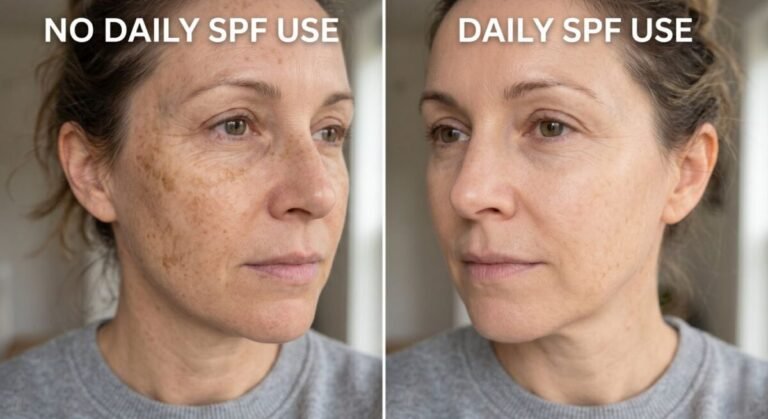
If you’re over 40 and still reaching for the same sunscreen you used in your 30s, or skipping it most mornings, the math has changed and your skin knows it. After menopause begins, skin undergoes real structural shifts that make it more vulnerable to UV damage, not less. Photoaging accounts for up to 80% of visible aging, and that number climbs the more unprotected sun exposure accumulates over a lifetime. The age spots, the loss of firmness, the uneven tone you’re noticing now are largely the result of years of UV damage working quietly in the background.
Skin thins naturally after 40 as collagen and elastin production slows, which makes it more permeable to UV rays and slower to repair afterward. The moisture barrier weakens, so dryness deepens and the irritation threshold drops. Hyperpigmentation risk rises because past sun damage surfaces as dark spots that are difficult to fade without consistent, broad-spectrum protection. If your sunscreen isn’t also actively hydrating and supporting your barrier, it’s doing the minimum while your skin needs more.
As Dr. Hiva Fassihi, Consultant Dermatologist, has said, a broad-spectrum sunscreen is the best anti-aging product you’ll ever use. Not your retinol. Not your peptide serum. Not your vitamin C. SPF is the one product that stops photoaging from accumulating in the first place, which means everything else in your routine has a fighting chance.
SPF 50 vs. SPF 30: Why the Extra Protection Matters for Mature Skin
Many women assume SPF 30 is close enough, and for years it may have been. But for skin that’s already accumulated decades of sun damage, that gap matters more than it used to. SPF 30 blocks approximately 97% of UVB rays; SPF 50 blocks approximately 98%. That one additional percentage point means 50% less UV radiation reaching your skin, and for mature skin working to hold on to existing collagen, that reduction is meaningful.
SPF level alone isn’t the full picture. UVB causes burning, but UVA causes aging. UVA rays penetrate deeper into skin layers, damage collagen and elastin directly, trigger hyperpigmentation, and pass through both clouds and glass. If you work near windows or drive regularly, you’re accumulating UVA exposure even on days you never step outside. Broad-spectrum protection against both UVA and UVB is non-negotiable. Look for “broad-spectrum,” “PA++++,” or “UVA in a circle” on the label. SPF 50 is the sweet spot: it offers meaningfully stronger protection than SPF 30 without the heavier textures sometimes associated with higher SPF levels.
What to Look for in SPF Over 40: The Harpy Nest Checklist
Before spending money on any sunscreen for menopausal skin, run it through this checklist. A formula that doesn’t meet most of these is not worth adding to your routine.
Non-negotiable requirements:
- SPF 50+: Superior protection for skin that’s already working against accumulated damage
- Broad-spectrum: Blocks both UVA (pigmentation and aging) and UVB (burning)
- No white cast: Must disappear cleanly across all skin tones for daily wear to feel realistic
- Non-comedogenic: Won’t clog pores; mature skin can still be breakout-prone
Skincare ingredients that make SPF work harder:
The best sunscreen for dry mature skin doesn’t just sit on top and block rays. It works as part of your skincare routine. These ingredients have the most evidence for benefit in mature skin formulas:
- Hyaluronic acid: Draws water into skin, plumps fine lines, addresses menopausal dryness directly
- Niacinamide: Calms redness, evens skin tone, brightens hyperpigmentation
- Vitamin C: Fades sun spots and age spots, provides antioxidant protection against free radicals
- Vitamin E: Protects the skin barrier, soothes, works alongside vitamin C for stronger antioxidant action
- Shea butter: Deeply moisturizing without a greasy or heavy film
- Peptides: Support barrier function and skin repair
- Salicylic acid: For acne-prone mature skin that still breaks out, keeps pores clear without over-drying
As Dr. Sophie Momen, Dermatologist, recommends: look for sunscreens formulated for sensitive skin with moisturizing ingredients like shea butter and hyaluronic acid, and seek out agents that brighten like niacinamide. That combination addresses menopausal dryness while protecting against further photoaging at the same time.
The Harpy Nest Top 15 SPFs for Mature Skin
Every product below was tested by women 40+ in everyday conditions: commuting, working from home, outdoor errands, makeup layering. All affiliate relationships are disclosed. No brand paid for placement.
Best Overall SPF Over 40: La Roche-Posay Anthelios Age Correct / UVMune 400 Hydrating Suncream SPF 50+
| Detail | Info |
|---|---|
| SPF | 50+ |
| Key Ingredients | Hyaluronic acid, niacinamide |
| Texture | Lightweight moisturizer; silky, fast-sinking |
| Finish | Natural, non-greasy; makeup-friendly |
| Best For | Sensitive skin, dry-to-normal skin, daily wear |
Why We Love It: La Roche-Posay is the name dermatologists reach for first, and the Anthelios range delivers on that reputation. Broad-spectrum SPF 50+ in a formula that feels like a moisturizer going on, not a sunscreen. Hyaluronic acid addresses menopausal dryness by drawing moisture into the skin; niacinamide works on uneven tone and redness. On most days, this formula is rich enough to skip a separate moisturizer entirely, which simplifies a morning routine that may already have too many steps.
Potential Downsides: Priced above drugstore options, and may not feel rich enough for skin that’s deeply dry even after moisturizer.
Who Should Buy: Anyone wanting a no-fuss, dermatologist-approved daily sunscreen that hydrates, brightens, and protects without extra steps.
Best for Fine Lines and Wrinkles: La Roche-Posay Anthelios Age Correct SPF 50+
The hyaluronic acid visibly plumps fine lines within days of consistent use; niacinamide smooths uneven tone over 2 to 4 weeks. If fine lines and wrinkles are your primary concern, the Anthelios Age Correct is the most practical starting point because it works as moisturizer, anti-aging treatment, and SPF in one formula.
Best for Brightening and Hyperpigmentation: Murad Multi-Vitamin Clear Coat Cream SPF 50
| Detail | Info |
|---|---|
| SPF | 50 |
| Key Ingredients | Vitamins C, D, E, F, B complex |
| Texture | Weightless gel |
| Finish | Radiant, non-greasy |
| Water-Resistant | 40 minutes |
| Best For | Sun spots, dullness, hyperpigmentation |
Why We Love It: Murad packs every major antioxidant vitamin into a gel formula that feels modern and light. Vitamins C and E work together to fight free radicals while actively fading existing sun spots; the water resistance means it holds up on active days. If age spots or dark spots are your most visible concern right now, this formula treats the problem while protecting against new damage.
Potential Downsides: Premium price, and the gel texture may not provide enough moisture for very dry skin types.
Who Should Buy: Women battling hyperpigmentation, dullness, or dark spots who want SPF that actively brightens over time.
Best Budget Brightening SPF: L’Oréal Revitalift Clinical Vitamin C UV Fluid SPF 50+
| Detail | Info |
|---|---|
| SPF | 50+ |
| Key Ingredients | Vitamin C, hyaluronic acid, vitamin E |
| Texture | Fluid, lightweight |
| Finish | Luminous |
| Best For | Budget-friendly brightening |
Why We Love It: Vitamin C brightening SPF at high-street price is rare, and L’Oréal delivers it well. The combination of vitamin C plus hyaluronic acid addresses both dullness and menopausal dryness simultaneously, and it layers cleanly under makeup without pilling.
Potential Downsides: Too light for very dry skin; smaller bottle than premium options.
Who Should Buy: Anyone wanting vitamin C results in an SPF without paying premium prices.
Best Tinted Mineral Sunscreen: MERIT The Uniform Tinted Mineral Sunscreen SPF 50
| Detail | Info |
|---|---|
| SPF | 50 |
| Key Ingredients | Non-nano zinc oxide, glycerin, meadowfoam seed oil |
| Type | 100% mineral |
| Texture | Soft cream |
| Finish | Natural, second-skin; no chalkiness |
| Best For | Sensitive skin, all skin tones, makeup replacement |
Why We Love It: Most mineral sunscreens leave a white cast that makes daily wear impractical, especially on medium to deep skin tones. MERIT’s tinted formula solves this with a sheer color wash that blends into skin rather than sitting on top of it. The glycerin and meadowfoam seed oil address dryness without feeling heavy, and it can genuinely replace light foundation on low-maintenance days.
Potential Downsides: Higher per-ounce cost; mineral formulas can feel slightly thicker than chemical, though this one is lighter than most.
Who Should Buy: Sensitive or reactive skin types, anyone who prefers mineral protection, and those who want SPF that doubles as light coverage.
Best Mineral Alternative: TIZO Mineral Tinted Facial Sunscreen SPF 50
| Detail | Info |
|---|---|
| SPF | 50 |
| Key Ingredients | Zinc oxide |
| Type | 100% mineral |
| Finish | Silky matte |
| Best For | Oily-to-normal skin, under foundation |
Why We Love It: TIZO’s matte finish controls shine effectively, and the silky texture works both alone and as a base under foundation. Oil-free and non-comedogenic, so it won’t contribute to breakouts.
Who Should Buy: Oily-to-normal skin types who prefer mineral protection and want a matte result.
Best SPF for Very Dry Skin: SkinCeuticals Ultra-Facial UV Defense
| Detail | Info |
|---|---|
| Key Ingredients | Shea butter |
| Texture | Rich, nourishing cream |
| Finish | Smooth, non-greasy |
| Best For | Very dry, menopausal skin |
Why We Love It: Shea butter provides the kind of deep, lasting moisture that lightweight serums and gels can’t match for skin that’s genuinely parched. SkinCeuticals balances richness with a smooth, non-greasy finish so it never feels heavy. On days when your skin feels tight from the moment you wake up, this is the formula to reach for. It can also prevent discoloration over time, a meaningful secondary benefit for mature skin.
Potential Downsides: Premium price; SPF level isn’t prominently listed on all product listings, so confirm before purchasing.
Who Should Buy: Women whose skin feels dry even after a full moisturizer step, and who want SPF to replace their moisturizer entirely.
Best for Dull Skin (Dewy Finish): Kate Somerville HydraKate Illuminating Drops SPF 50+
| Detail | Info |
|---|---|
| SPF | 50+ |
| Key Ingredients | Glycerin, antioxidants |
| Texture | Serum-like drops |
| Finish | Illuminating, dewy |
| Best For | Dull skin, lack of radiance |
Why We Love It: The serum texture goes on lighter than a cream but delivers hydration that holds through the day. The illuminating finish restores glow immediately, which matters when menopausal skin tends to look flat even after moisturizer. Layers cleanly under makeup.
Who Should Buy: Anyone whose skin looks dull and wants SPF that adds visible radiance right away.
Best Budget SPF: Garnier Ambre Solaire Anti-Age Super UV SPF 50
| Detail | Info |
|---|---|
| SPF | 50 |
| Key Ingredients | Hyaluronic acid, niacinamide |
| Texture | Lightweight lotion |
| Finish | Smooth, non-greasy |
| Best For | Budget shoppers, everyday wear |
Why We Love It: Hyaluronic acid plus niacinamide at drugstore price is exactly what it sounds like: the ingredients that matter, without the premium markup. This formula smooths, firms, and hydrates while keeping dryness in check across the day.
Potential Downsides: Packaging is less premium; may not be rich enough for very dry skin.
Who Should Buy: Anyone wanting an effective, affordable daily SPF that addresses menopausal dryness with real skincare ingredients.
Best Budget SPF (Runner Up): No7 Protect and Perfect Intense Advanced Facial Suncare SPF 50+
| Detail | Info |
|---|---|
| SPF | 50+ |
| Key Ingredients | Protect and Perfect serum technology, brightening complex |
| Texture | Nourishing, fast-sinking |
| UVA Rating | 5-star |
| Best For | Fine lines, dullness, budget buyers |
Why We Love It: No7’s Protect and Perfect technology has real clinical backing, and wrapping it into an SPF formula is a smart move. The 5-star UVA rating means strong aging protection alongside the line-smoothing and brightening benefits the serum is known for.
Who Should Buy: Budget-conscious shoppers who want proven anti-age technology alongside their sun protection.
Best SPF for Acne-Prone Mature Skin: Vichy Capital Soleil Uv-Clear SPF 50+
| Detail | Info |
|---|---|
| SPF | 50+ |
| Key Ingredients | Salicylic acid, niacinamide |
| Texture | Water-based, lightweight |
| Finish | Satin-matte |
| Best For | Acne-prone, oily-to-normal mature skin |
Why We Love It: Mature skin that still breaks out is more common than beauty content tends to acknowledge. Vichy’s water-based formula keeps pores clear with salicylic acid, calms redness with niacinamide, and delivers a satin-matte finish that controls shine without stripping moisture. Non-comedogenic and lightweight enough for daily wear even in warmer months.
Who Should Buy: Women whose mature skin still breaks out or skews oily, and who want matte SPF that doesn’t dry them out.
Best for Lacking Radiance: Ultra Violette Queen Screen Luminising Sunscreen SPF 50+
| Detail | Info |
|---|---|
| SPF | 50+ |
| Key Ingredients | Vitamin C, pink algae extract |
| Texture | Serum-like |
| Finish | Dewy, radiant |
| Best For | Dull skin, wanting immediate glow |
Why We Love It: The dewy finish feels intentional rather than greasy, and the vitamin C plus pink algae combination addresses both brightness and firmness over time. This layers under makeup without pilling, which is rarer than it should be in sunscreen formulas.
Who Should Buy: Anyone whose skin looks flat or dull and wants SPF that looks like skincare in the best possible way.
Best Primer and SPF Hybrid: Thrive Causemetics 3-in-1 Sunscreen + Primer + Hydrator SPF 37
| Detail | Info |
|---|---|
| SPF | 37 |
| Key Ingredients | Hydrating gel base |
| Texture | Gel |
| Finish | Blurred, smooth |
| Best For | Makeup prep, pore blurring |
Why We Love It: Three jobs in one product: sunscreen, primer, and hydrator. It blurs pores effectively and preps skin for foundation without requiring a separate primer step.
Note: SPF 37 falls below our SPF 50+ recommendation. Use this as your primer step over a separate SPF 50+ if you’ll be outdoors for extended time.
Who Should Buy: Women who want to simplify their morning routine and already plan to add a separate SPF 50+ underneath or stay mostly indoors.
Best SPF Stick for Reapplication: Shiseido Sunscreen Stick SPF 50
| Detail | Info |
|---|---|
| SPF | 50 |
| Key Features | Water-resistant; WetForce and Heatforce technology |
| Best For | Reapplication on the go, outdoor activity |
Why We Love It: Shiseido’s WetForce and Heatforce technology means this formula actually becomes stronger when it contacts sweat or heat, which is the opposite of what most sunscreens do. The stick format makes midday reapplication possible without disturbing makeup, which is the main reason people skip reapplication in the first place.
Who Should Buy: Anyone outdoors for extended periods who needs to reapply every two hours without ruining their look.
How to Apply SPF Over 40: The Harpy Nest Method
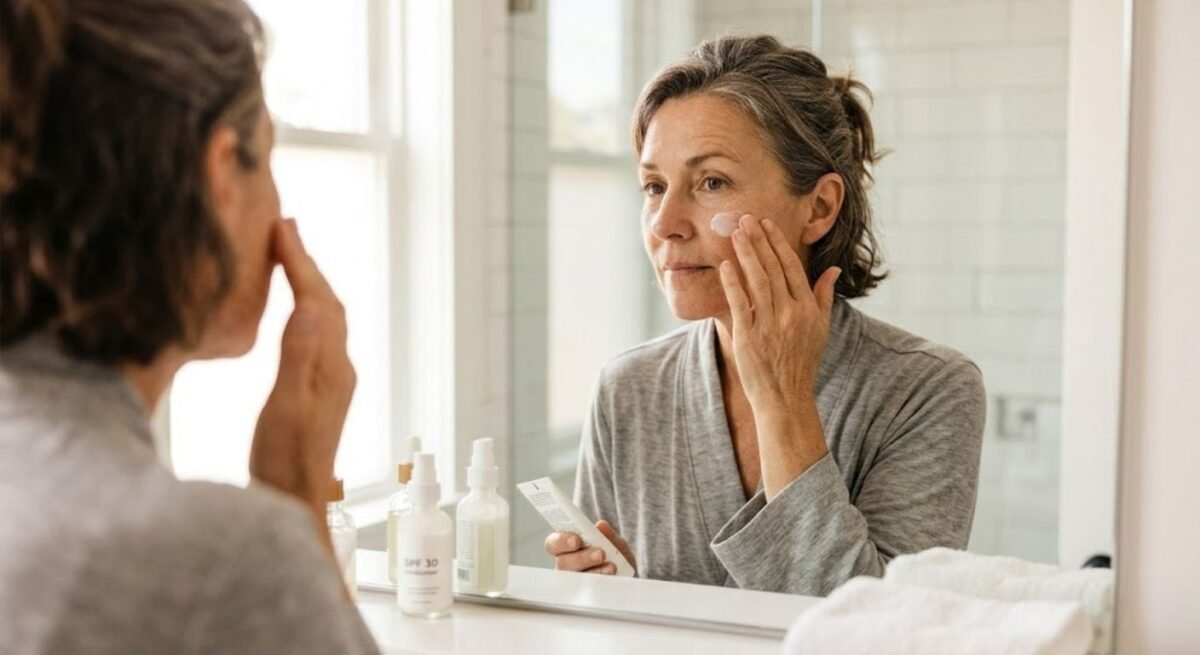
Most women underapply sunscreen by at least half, which dramatically reduces the protection they’re actually getting. Use a dessert spoon amount (approximately 1.25 mL) for face and neck combined, or two finger-lengths of product pressed together. That may feel like more than you’re used to, but it’s the amount needed to reach the SPF level printed on the bottle.
Coverage matters as much as quantity. Face, eyelids, lips, tops of ears, and the full neck should all receive product. Apply 15 to 20 minutes before sun exposure so the formula can bind properly. Reapply every two hours if you’re outdoors; UV rays are present year-round, including in winter and on overcast days. If you wear makeup, an SPF stick like the Shiseido pick makes midday reapplication realistic without starting over.
The order of application matters too. Retinol and vitamin C go on first. Moisturizer comes next if needed. SPF is always last in the morning routine. Used in the right sequence, they support rather than cancel each other.
Frequently Asked Questions About Menopausal Dryness and SPF
Q: How much does a quality SPF over 40 typically cost?
A: Drugstore options run approximately £13 to £25 (Garnier, No7, L’Oréal). Premium options run approximately £34 to £55 (La Roche-Posay, Murad, SkinCeuticals). The price difference reflects brand tier, ingredient load, and bottle size rather than SPF level itself.
Q: How long does it take to see results from SPF with skincare ingredients?
A: Hydration can feel immediate if the formula contains hyaluronic acid. Brightening from vitamin C typically takes 2 to 4 weeks of daily use. Photoaging prevention is cumulative; the longer you use SPF consistently, the more protection you accumulate.
Q: Can I skip moisturizer if my SPF is hydrating enough?
A: Yes, if your skin feels comfortable. Rich SPF formulas like La Roche-Posay Anthelios and SkinCeuticals Ultra-Facial UV Defense are designed to work as both moisturizer and sunscreen. If your skin doesn’t feel tight or dry without a separate moisturizer step, skipping it is fine.
Q: Is mineral SPF better than chemical SPF for menopausal skin?
A: Not categorically. Both types provide effective broad-spectrum protection at SPF 50+. Mineral (zinc oxide, titanium dioxide) is better suited for sensitive or reactive skin. Chemical formulas often feel lighter and more comfortable for daily wear. Choose based on your skin type and how the formula feels, not the filter type alone.
Q: What if I have darker skin and worry about white cast?
A: Look for tinted mineral formulas (MERIT, TIZO) or chemical formulas from La Roche-Posay, Garnier, and Murad, all of which disappear cleanly across a range of skin tones. A white cast is a texture and formulation issue, not an unavoidable feature of mineral SPF.
Q: Do I need SPF on days I stay indoors?
A: Yes, if you’re near windows. UVA rays penetrate glass and contribute to the same collagen damage and hyperpigmentation that outdoor exposure causes. Daily SPF is doing real work even when you never step outside.
Q: Will SPF interfere with my retinol or vitamin C serum?
A: No. SPF is the final step in your morning routine, applied after everything else. Retinol and vitamin C are applied first, then moisturizer if needed, then SPF. Used in this order, they support rather than cancel each other.
Q: Why does menopausal dryness make SPF feel more uncomfortable than it used to?
A: A weakened moisture barrier makes skin more reactive and more sensitive to formula textures. Lightweight SPFs that felt fine in your 30s may now feel drying or tight. This is usually a signal to look for richer formulas with shea butter, hyaluronic acid, or glycerin rather than switching to a lower SPF.
Final Thoughts
Menopausal dryness changes the rules of skincare, and SPF is one of the places where that change shows up most clearly. The formulas that were adequate a decade ago may now leave skin tight, dull, and underprotected. Upgrading to an SPF 50+ broad-spectrum sunscreen with real skincare ingredients, specifically hyaluronic acid for moisture, niacinamide for tone, and vitamin C for brightening, addresses both the protection gap and the dryness that comes with hormonal skin changes. Consistency matters more than any single product choice; the best SPF is the one you’ll actually use every morning.
The long-term payoff of daily broad-spectrum SPF goes well beyond preventing new sun spots. It actively slows the collagen breakdown that makes skin look older, prevents the hyperpigmentation that’s difficult to reverse once it sets in, and creates the conditions where your other skincare products, your retinol, your peptides, your vitamin C, can do their best work. That’s a return that compounds with every day you wear it.


Discover more from The Harpy Nest
Subscribe to get the latest posts sent to your email.